
Samarth Ramdas, His Guru And Ramdasi Parampara
Overview
The age of medieval India saw the rise of many great personalities. Samarth Ramdas was one such pioneer in the realm of spirituality. He was not only a prolific philosopher-writer but also a staunch follower of Lord Rama, who helped in laying the foundation of a disciplined tradition of action-oriented Bhakti. The spiritual path of Ramdas is different, marked by solid self-control, divine revelation, and the creation of an independent tradition. Most saints are highly associated with a particular lineage of gurus. Learning about his guru and ancestry may assist one in learning more about his special place in Indian spirituality.
Guru and His Role in Indian Spiritual Tradition
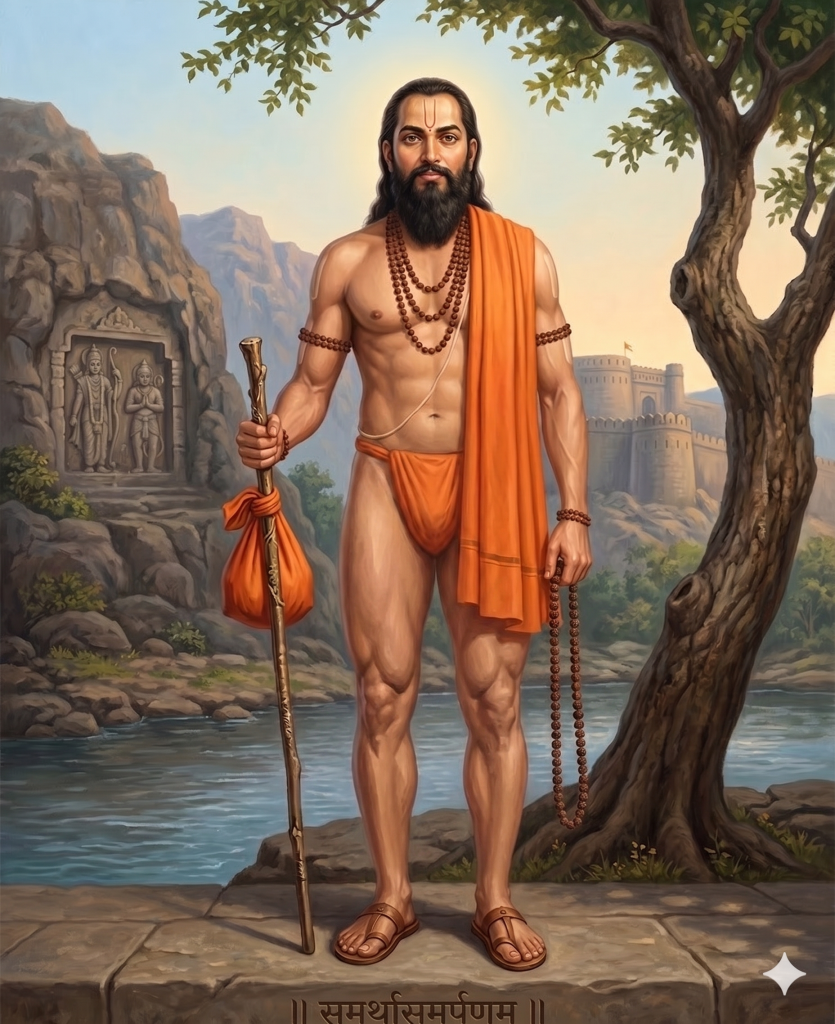
The Indian philosophy states that the guru is the most vital one who instructs, initiates, and directs the disciple through the path of emancipation. Most saints are members of a well-established guru-sishyaparampara (lineage), where teachings are passed on across the generations. The life of Ramdas is, however, not fitting in this conventional framework. His trip suggests that the guru principle is necessary, but does not have to be in the shape of a physically present teacher.
Divine Guru: Lord Rama as the Supreme Guide
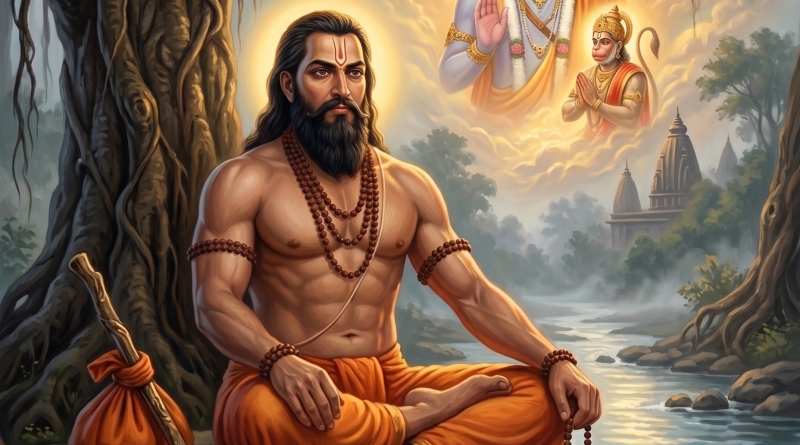
The ancient versions state that Samarth Ramdas was spiritually taught by Lord Rama himself. It is believed that Ramdas saw God Rama directly in his younger age (darshan). He experienced inner awakening and spiritual guidance as a result of this mystical encounter. This kind of initiation is considered self-revealed or divine (sakshat guru kripa). Based on this belief, Ramdas is among the few saints who possess power through a direct relationship with God other than institutional lineage.
Years of Tapasya and Inner Transformation
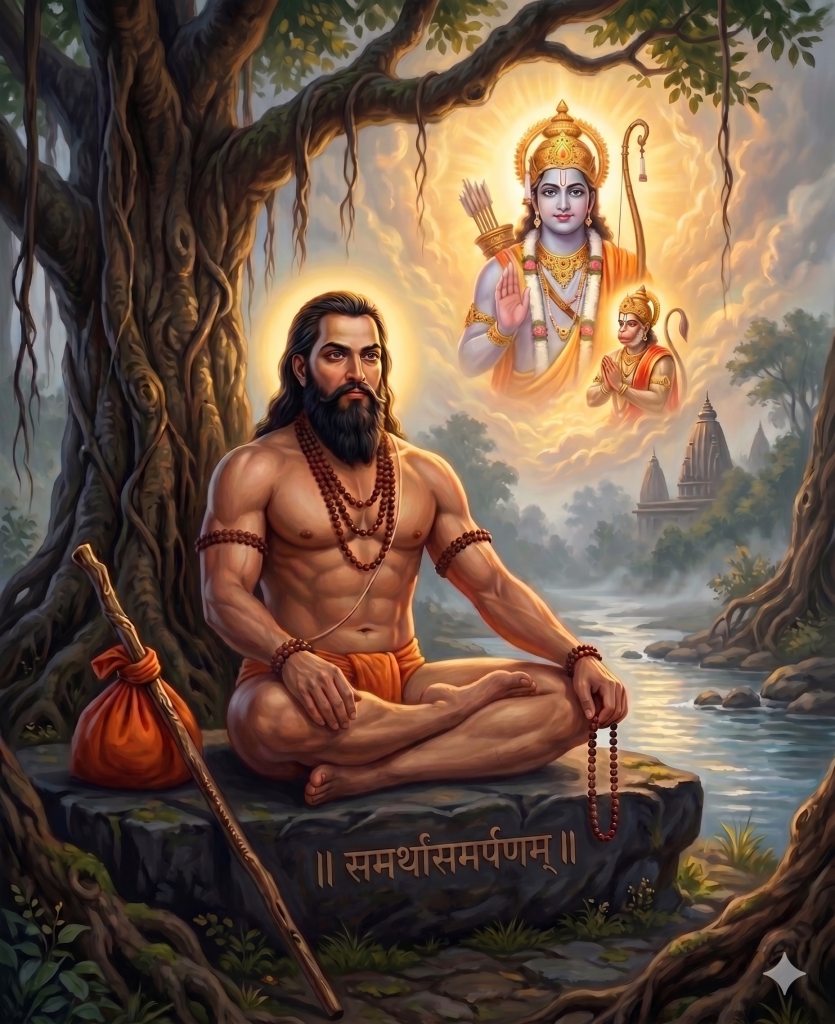
Ramdas spent nearly 12 years in deep meditation. This completely transformed his personality. The period of tapasya (austerity) was one of the turning points in his life. He practised extremely strict self-discipline and continued chanting the name of Rama at Takli near Nashik. This period of penance dawned a new wave of self-discovery in him, and the knowledge later reflected on his views of the world and his teachings. He took this rigorous spiritual training as his living teacher, civilizing his mind and grounding his philosophy on experience rather than dogma.
Philosophical Background: Vaishnav and Bhakti Traditions
Ramdas was deeply rooted in the larger streams of Indian spirituality, though he was not officially initiated into a tradition. He is also entrenched in the Vaishnav Bhakti school of thought due to his devotion to Lord Rama, which emphasizes:Individual devotion (bhakti), Living a moral life (dharma), Give yourself over to God. His revolutionary book, Dasbodh, is a mix of life tips and spirituality.
Influence of Modern Saints
The Bhakti movement that thrived in Maharashtra inspired Ramdas with the cult of saints such as Tukaram. However, by concentrating on power, discipline, and social accountability, he was no longer following the path of devotion to pure emotion.
Founder of the Samarth (Ramdasi) Tradition
Ramdas did not receive a lineage but established his own spiritual order, the Samarth Sampradaya. He had many great disciples including Uddhav Swami, Keshav Swami and Kalyan Swami. He established several mathas (monastic centers). His doctrines promoted a balance of physical strength, piety, and social work. This marked the onset of a new generation that incorporated spirituality in nation-building and righteous conduct.
Society and Leaders
Ramdas was a Guru who influenced both society and politics as well as spiritual circles. Samarth Ramdas Swami was revered by Chhatrapati Shivaji Maharaj, who considered him as his guru. It is believed Swamiji inspired in Chhatrapati Shivaji Maharaj values of heroism and leadership founded on morality. This relationship depicts his role as a mentor to the people and the society collectively.
To sum up, the story of the lineage of Samarth Ramdas cannot be categorized. His spiritual identity can be thought of in terms of three dimensions, which are interrelated: Philosophical Lineage: it is based on the Bhakti and Vaishnav tradition; Divine Lineage: he was, in fact, directly led by Lord Rama; Institutional Lineage: the founder of the Samarth (Ramdasi) sect. By doing so, Samarth Ramdas is not only a follower of a tradition but someone who created a living spiritual heritage that up to the present generation still inspires generations.
You may also like to read:
- Books Authored By Samarth Ramdas: What Do They Contain?
- The Living Legacy Of The Samarth Sampradaya: Tradition In Practice Today
- Swami Samarth Ramdas – A Brief Introduction
- Spiritual Blueprint Of Swarajya: The Influence Of Dasbodh In The Rule Of Shivaji