
Intelligent and Intellectual: Understanding the Difference
Intellectual and intelligent are English words with seemingly similar implications. If you are anywhere in the midst of any social congregation, you will find people using words like “intelligent” and “intellectual”. These words are common in any conversation. The thing is, many people do that synonymously. However, in reality, both words differ. They essentially mean very different things.
First of all, there is a core difference between these words. You must understand the difference between their usage. Why? So that you can use them more suitably. Moreover, you can have a better grasp of how the human mind works by understanding the actual connotations of these words. Also, you know how people can contribute to the growth of society.
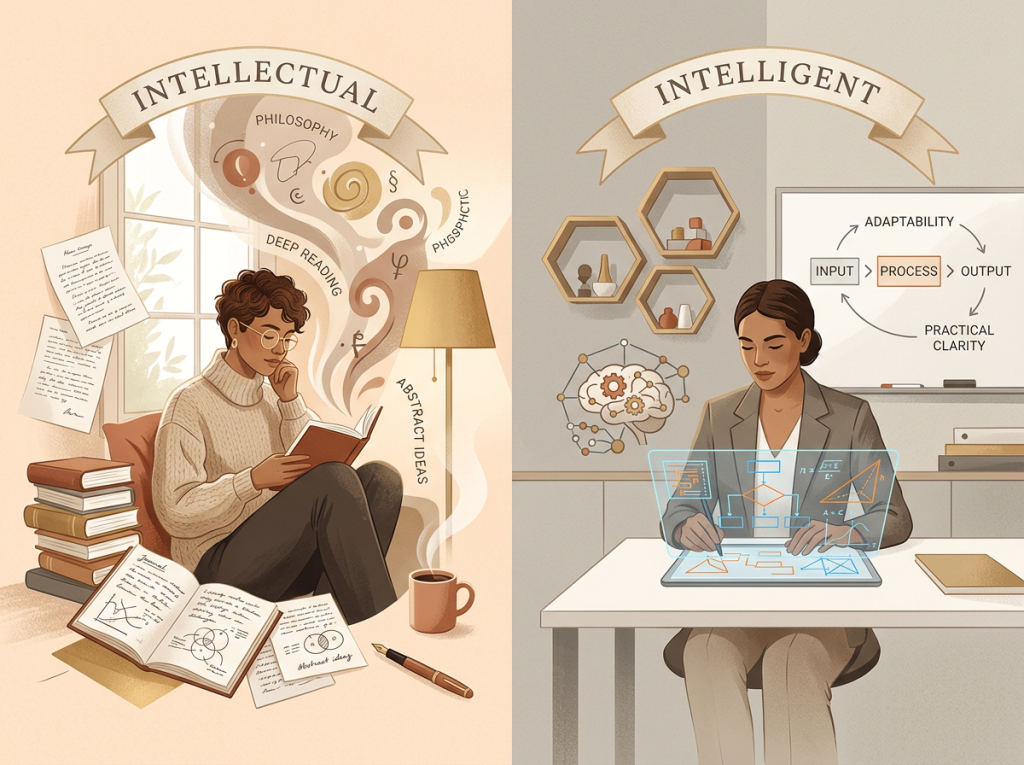
What does “Intellectual” mean?
An individual can be labelled as intellectual when he or she keenly engages with theories, thoughts, philosophies, and non-concrete thoughts. It’s more about standards, ideas, interests, and the way a person chooses to use their mental energy. Rather than being solely about cognitive capacity. Intellectualism is considered to be an outlook centred around notions. Intellectuals always have an eagerness to explore a wide range of complex ideas and philosophical questions, often drawn to scholarly pursuits.
They are people who often derive great satisfaction from scrutinising art and culture. They stay informed about present events through watchful disposition. They show keenness in exhaustive analysis, pondering abstract questions, and engaging in deliberations about ethics, connotations, and the human experience.
An intellectual individual usually has a deeper interest in theoretical subjects. They love reading and discussing philosophy, literature, art, and other academic topics. Rather than delving into them purely for practical reasons, such a person always follows knowledge and understanding for their own sake. The intellectual person also regularly engages in critical analysis of social and cultural trends and phenomena, and prefers deeply meaningful discourse and thoughtful debates.
What does “Intelligent” mean?
Intelligence refers to the innate or developed ability to learn, understand, use deduction and reason, and solve problems competently. It involves the ability to rapidly process different information, think critically, be flexible, and adapt to new situations. It even includes the skill to apply knowledge in diverse practical ways.
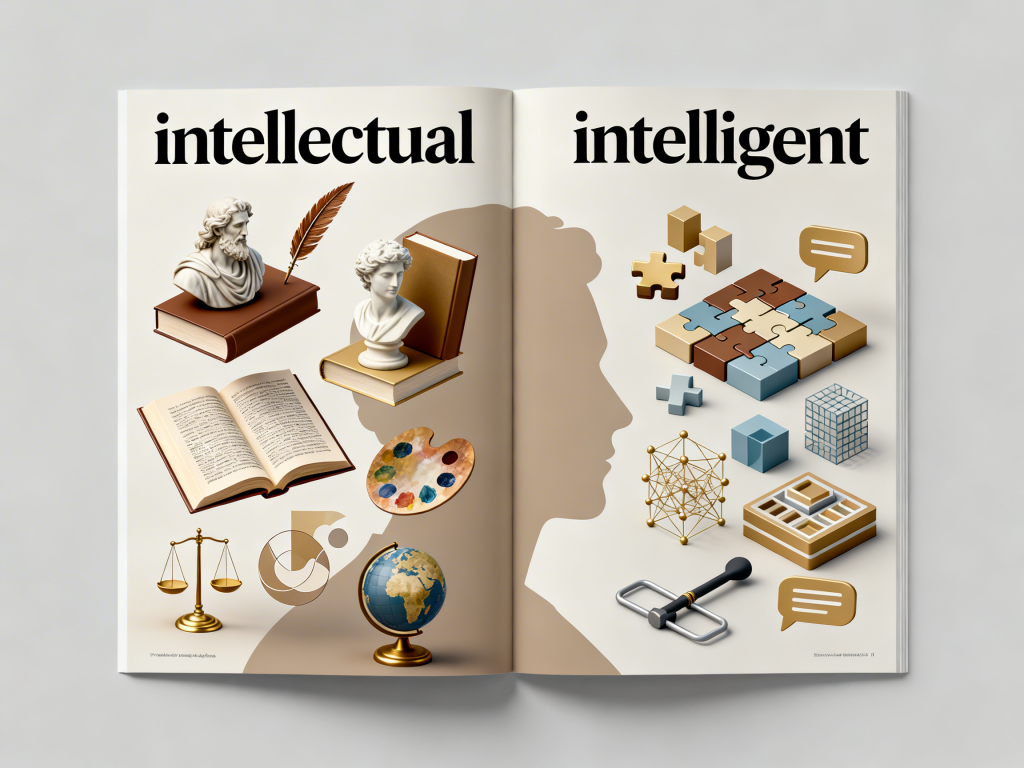
Intelligence can express itself in several ways. While one person might excel at intricate mathematical reasoning and quickly identifying patterns, another person might display extraordinary emotional intelligence. They may be fast at interpreting social cues. Interestingly, they do that with significant accuracy. These people can deal with interpersonal circumstances deftly. Similarly, others might have spatial intelligence, etymological prowess, or mechanical aptitude.
Intelligence is all about the efficiency of mental processing; the efficiency of a person’s cognitive machinery functioning. These encompass analytical and logical thinking, smart problem-solving skills, and rapid understanding of new concepts. An intelligent person shows some vital signs, demonstrating vigorous cognitive abilities. Their ability to comprehend things spans across different domains. Moreover, they have the flexibility to adapt to varying circumstances and can connect apparently disparate details.
The crucial distinctions
A highly skilled doctor or surgeon can be adept at treating complex health conditions, but may have no curiosity about political theory or philosophical discourse. It is significant to note that the connection between intelligence and intellectualism is not strictly linear or dependent. Such potentials can and often do exist individually or together in diverse combinations.
You may also like to read:
- The Cognitive Triad: Intelligence, Cleverness, And Intellectualism
- A Case For Nīti Education: Cultivates Character, Wisdom, And Practical Integrity
- Swami Vivekananda
- The Importance Of Emotional Intelligence In Leading A Sensible Life