
Dharma In Ancient India: Education, Work Ethic, And The Creation Of Responsible Persons
Dharma was not just a religious notion in ancient India- it was the code of life. Dharma was based on morality, obligation, and righteousness that influenced the conduct of an individual and the social order. It established what was right, just, and appropriate in all situations, and motivated people to be responsible and upright. This universal system saw to it that individual development was in tandem with the health of the society.

Education: Path to character formation
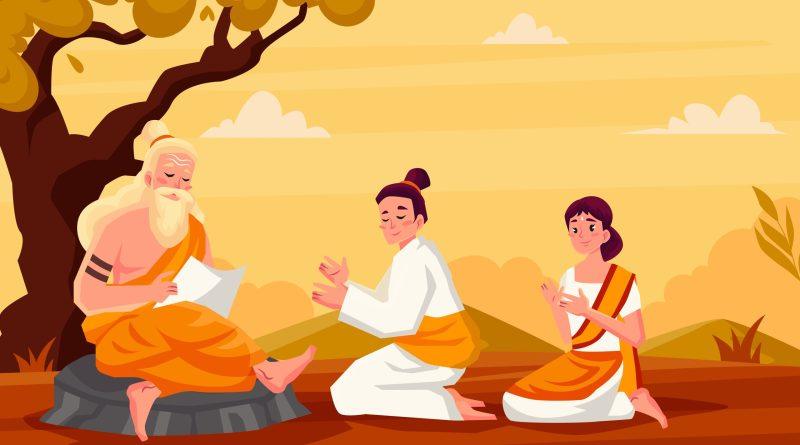
Ancient Indian education was much more than the gathering of knowledge. The Gurukul system focused on holistic growth, intellectual, moral, and spiritual. Students were cohabiting with their teacher, were taught to be disciplined, humble, and exercise self-control, as well as study subjects such as philosophy, science, and the arts.
Its main aim was not to build a career but a character. Students were conditioned to internalize Dharma with the following qualities: truthfulness (Satya), non-violence (Ahimsa), and self-restraint (Dama). Education was, therefore, an experience of transformation that made people responsible and moral members of society.
Work Ethic based on Duty, not Desire
The ancient Indian philosophy attached great significance to Karma-action conducted with a feeling of obligation. Work was not self-motivated, but it was motivated by the desire to serve society. It was a religious thing to do what is right, regardless of whether one was a teacher, warrior, merchant, or farmer.
This ideology encouraged self-control, hard work, and quality. A powerful work ethic was inculcated through the concept of Nishkama Karma, which means doing the work without any attachment to the results. It made selfishness less desirable and made people work hard and be responsible instead of being rewarded.
Social responsibility in Personal development
Dharma pointed out that one could not be successful in isolation without regard to social responsibility. Each individual was obligated to family, community, and society in general. Service, generosity (Dana), and compassion were part of day-to-day living.
This interrelated perception brought about a feeling of responsibility. Citizens were urged not only to do the things that benefit them, but also to do things for the common good. These values promoted social unity and reduced the degree of conflict since people were governed by a common code of morality.

Balancing Rights with Duties
In contrast to contemporary models that tend to focus on rights, ancient Indian philosophy prioritized responsibilities. The principle was very easy to understand but incredibly deep: people have to complete their responsibilities, and the rights of other persons will be secured as a natural law.
This duty-oriented order provided a society of equality and fairness. It discouraged rights and promoted a sense of responsibility to the extent that individuals would make positive contributions to the environment.
Relevance in the Contemporary World
The teachings of Dharma are very relevant in the modern world, which is very fast-paced and self-centred. The focus on moral education, ethics of hard work, and social accountability offers a good model to make responsible individuals.
The restoration of these values does not imply revisiting the past but rather translating the wisdom of many centuries into the present-day world. Through the acceptance of Dharma, one can achieve the virtues of integrity, purpose, and an enhanced sense of responsibility that are essential to the creation of a sustainable and harmonious future.
Conclusion
Dharma in ancient India was not only a philosophy, but also a way of life, defining education, work, and social behaviour. It was a guide to responsible living because it was a reminder that proper development is not only in accomplishment, but the righteousness of accomplishment.
You may also like to read:
- Dharma Meaning In English
- Samanya Dharma – A Beginners Introduction
- Nitisastra: Ancient Wisdom For Modern Leadership And Life
- How Following Dharma Leads To Improved Common Sense And Wisdom
- How Nitishastras Of Ancient India Cultivate Common Sense And Wisdom For Superior Outcomes
- Samanya Dharma And A Good Spouse: Universal Ethics For A Good Marriage
- Samanya Dharma And Good Parenting: An Ancient Blueprint Of Nurturing Balanced Individuals