
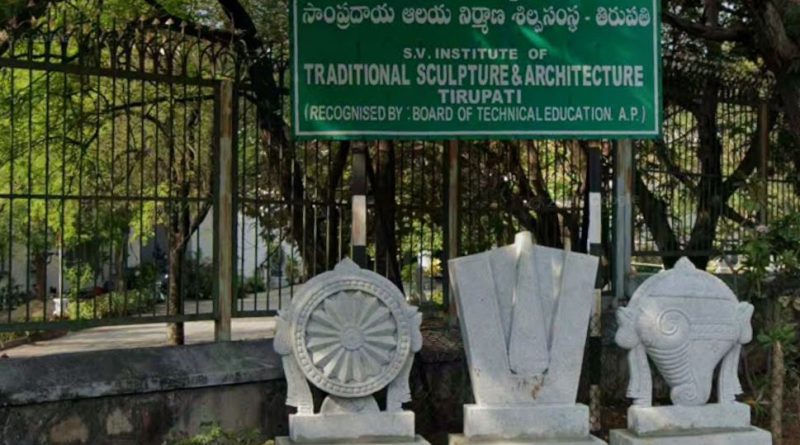
Reviving Sacred Craft: Diploma Programs At SVITSA, Tirupati
Situated in the divine topography of Tirupati, in close association with the Sri Venkateswara (Balaji) Temple, the Sri Venkateswara Institute of Traditional Sculpture and Architecture (SVITSA) stands as an embodiment of a bridge between ancient India’s vibrant temple traditions and the present generation.
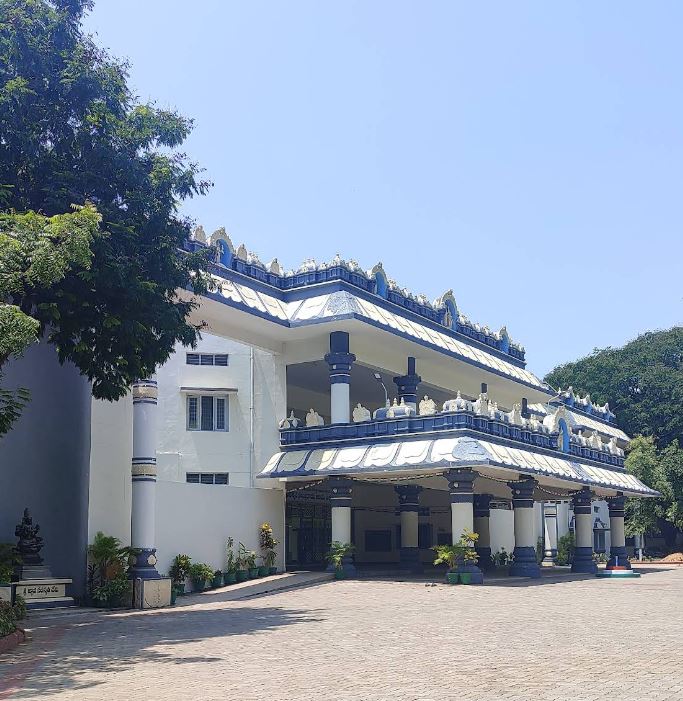
The foundations of the eminent institute were laid by Tirumala Tirupati Devasthanam (T.T.D.), to preserve, impart, and maintain the classical arts that defined the spiritual and cultural identity of India for over a thousand years.
History of Indian sculpture and temple art
The roots of Indian sculpture and temple art are very ancient as Bharat is the oldest living civilization. In the course of centuries, this knowledge was developed in the form of treatises, including Manasara, Mayamata, Samarangana Sutradhara, and Kasyapa Silpasastra. These treatises as well as ideas such as Angikabhinaya, as described by Bharata Muni, are the theoretical and practical basis of the curriculum of SVITSA. Here, art is not just aesthetic, but sacred knowledge, which is realized in temples, icons, and murals.
Six Specializations Rooted in Tradition
SVITSA provides a Diploma in Traditional Sculpture and Architecture (D.T.S.A.), a four-year fully funded course granted by the State Board of Technical Education and Training, Andhra Pradesh. Students get rigorous practical education in six conventional subjects:
- Temple Architecture – Designing and construction of vimanams, gopurams, mandapams, and traditional layouts of temples.
- Stone Sculpture – Relief of gods and architectural parts with the help of rigid iconographic regulations.
- Sudhai (Sudai) Sculpture – Lime-based plaster art applied extensively on the gopurams and ceilings, characterized by a lot of fine work and colorful finish, which was prevalent in Pallava, Vijayanagara, and Nayaka eras.
- Metal Sculpture – Metal and bronze icons were cast in traditional ways.
- Wood Sculpture – Complex carving of chariots, doors of temples, and ritual objects.
- Classical painting – The conventional forms of painting in temples and religious stories.
Education with Dignity and Support
The SVITSA is also special because the whole course is free, and the T.T.D. pays boarding, accommodation, medical treatment, study tours, textbooks, and even a 1 lakh fixed deposit under the name of the student during admission, which is refunded with interest upon successful completion (read terms and conditions).
It is open to 10th pass students between the ages of 15-20 years, but the age is relaxed in case of candidates belonging to traditional artisan families. A state-recognized diploma is awarded to graduates, and they can further their education at Telugu University, Hyderabad, through a degree in Bachelor of Fine Arts (BFA).
Creating Livelihoods Through Sacred Skill
In addition to education, SVITSA also plays a vital role in the maintenance of the livelihoods of the artisans. Graduates are employed in the production centers of T.T.D., in the Departments of Endowment and Archaeology, or have their own workshops. There are several current master sculptors and architects who are involved in restoring, building new temples, idols, murals, and heritage work both in India and other countries worldwide.
To the general public, this institute provides something that is priceless: access to traditionally trained artisans. Sculpture, restoration, painting, and architectural work can be contracted on a fee basis (professional) on a case-by-case basis by Temple committees, architects, heritage conservationists, spiritual institutions, and even individuals. Through this, the patrons not only get a work that is based on scripture and tradition, but also contribute directly to the sustenance of the living heritage of India.
A Call to Preserve Living Heritage
SVITSA is not merely an institute but a temple where ancient knowledge breathes in skilled hands. By patiently nurturing its artisans, popularizing its programs, and employing them to create, is what will keep the temples’ arts of India alive not as museum artifacts, but as living, sacred traditions that shape society today.
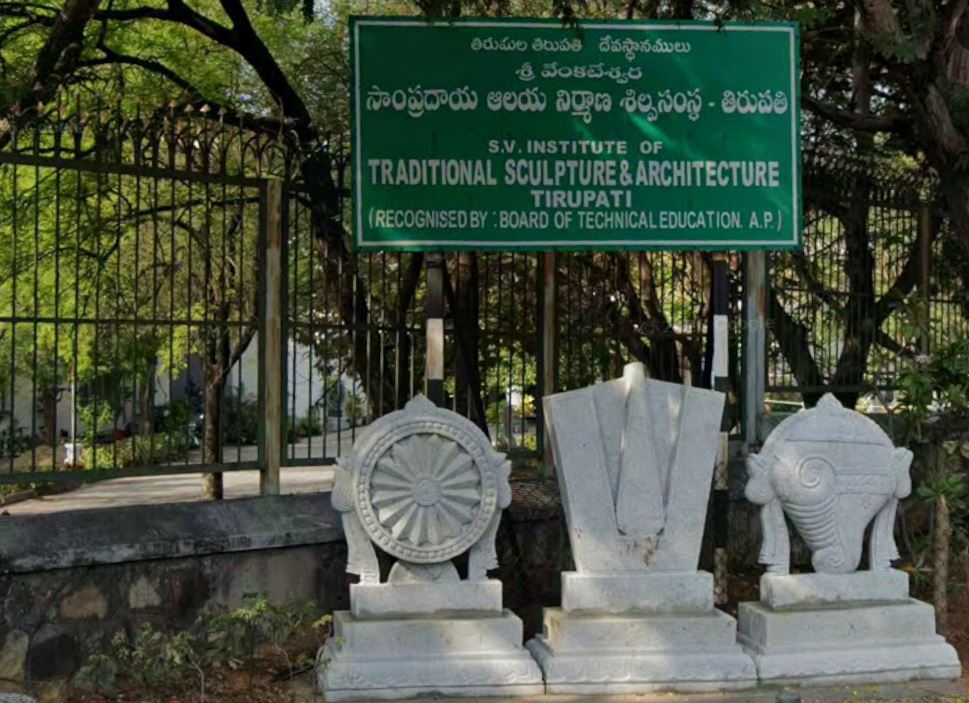
Address:
Sri Venkateswara Institute Of Traditional Sculpture And Architecture (SVITSA)
Alipri Road, Adjacent To Alipri Link Bus Stand
Tirupati, Chittoor District, A.P – 517507.
Phone: 0877-2264637
Website: https://www.tirumala.org/SVISTA.aspx
Google Maps Location: https://maps.app.goo.gl/
You may also like to read:
- Fostering Entrepreneurship: Empowering Youth Through Vocational Skills And The Wisdom Of 64 Kala
- 64 Kalas And Their Contribution To India’s High World GDP Share For 1500 Years
- How Neglect of 64 Kalas in Education Led to Sub-Optimal Industrial Output Post Indian Independence?
- High Employability Through 64 Kala Concept
Good and noble ìnitiative. Hope young children avail this facility.
good and excellent
Great work
Appreciate the work of preserving the art and heritage of our country .
Very pleased to hear about this, Wishing it excels in producing and sustaining indian heritage.
Good work done by TTD and SVU. Good use of pilgrim funds.
Excellent initiative to preserve our culture!