
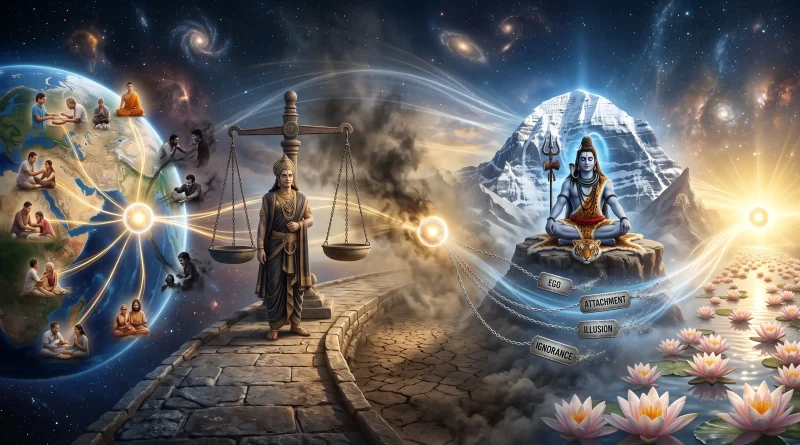
The Divine Executioner: How Yama And Shiva Turn Punishment Into Spiritual Grace
Beyond Fear: Understanding Divine Justice
In many religious practices, punishment is seen as a form of wrath or retribution. The Hindu worldview, however, has a much richer and more compassionate one. In here, there is no judgment of God but a call to awakening. What is “punishment” is actually a sacred process of purification which leads the soul towards wisdom, balance, and eventually liberation.
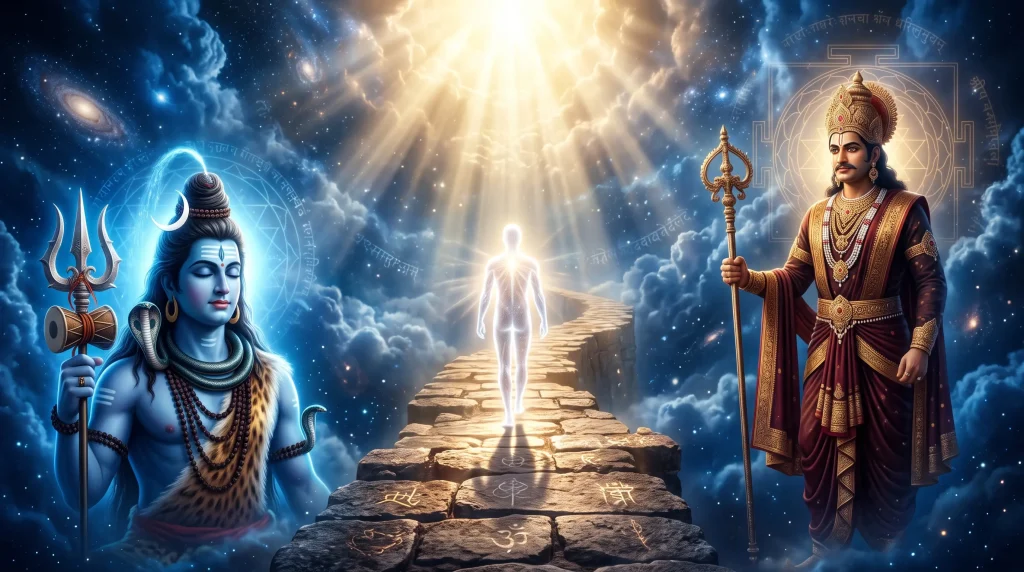
The two great cosmic forces of Yama, the Lord of Justice, and Shiva, the Lord of Transformation, lie at the core of this understanding. Their job is, although harsh, a higher one, namely, the spiritual evolution of the soul.
Karma: The Invisible Law of Cause and Effect
The law of Karma is the basis for divine justice in Hindu philosophy. Each thought, word, and action has consequences that affect an individual’s spiritual experiences. In the literal sense, Karma is neither reward nor punishment, but a balance that is universal and an instrument for learning responsibility.
Actions done in harmony with dharma raise the soul to the lofty heights. If they appear out of ignorance, greed, or hurt, they become karmic debts that will have to be settled in the future. Divine justice provides that no such lessons are lost or avoided.
Yama: The Impartial Guardian of Moral Order
Yama is not an angry executioner, but is thought to be a god to be feared. He’s a true believer in cosmic justice. The Garuda Purana teaches that when the soul leaves the body, it is judged by Yama based on one’s karmas and sent on to experience what is appropriate.
The demoralized abodes or “naraka,” which mean “hellish states,” are not places of perpetual punishment. Instead, they are corrective environments in which souls receive what they deserve for their actions and are allowed to let go of negative energy. When a soul completes its load of karma, it is offered the chance to serve again if it needs to learn more. So essentially, Yama is not held as the God of Punishment, but rather a divine teacher who guides souls to imbibe the lessons they need to understand to achieve spiritual progress.
Shiva: The Destroyer Who Liberates
Hindu belief adulates Yama as the one who does justice to all the souls in the end, Shiva is the ultimate supreme spirit who helps them in their transformation. In ancient texts and mythology, Shiva is worshipped as the God of Gods or the Mahadeva. He is denoted as the ‘Merciless One’ and also known as ‘The Ultimate Destroyer’. But Shiva does not destroy souls; he wipes out all forms of ignorance, attachment, ego, and illusion to cleanse the soul.
In many Puranic stories, Shiva is portrayed as being averse to anything but gracefully intervening in the affairs of men. It is through Shiva’s will that everything from demons, arrogant kings, to devout seekers, goes through severe trials. All of this suffering, however, turns into enlightenment, humility, and liberation.
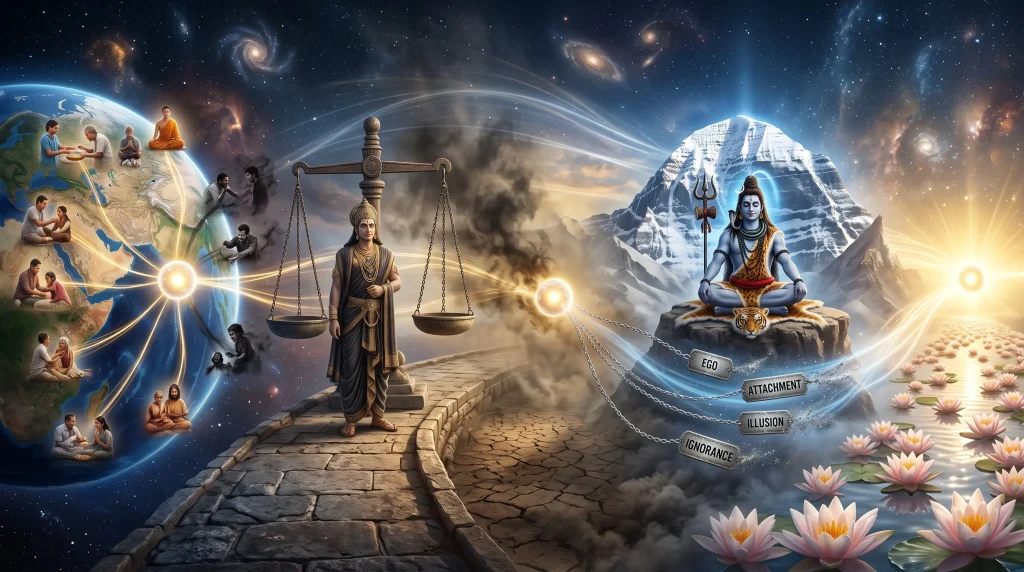
Shiva’s destruction is like a surgeon cutting out a disease; it is an expression of His divine compassion. The anguish of losing oneself to false identities finds its way to the revelation of true and everlasting identity.
Naraka: A Realm of Rehabilitation, Not Revenge
One aspect of Hindu philosophy is the awareness of the impermanent and transitory nature of naraka. These worlds serve a rehabilitative function, in contrast to the punishment of eternity. The soul becomes pure, learns, and gets ready for another birth.
This vision is one of a universe in which vengeance is not the determining force but wisdom and mercy. All experiences, whether positive or negative, help to awaken the soul over time.
The Hidden Grace Within Suffering
The lessons of Yama and Shiva are an expression of the spiritual reality that divine correction ultimately is a form of love. What makes Hindu philosophy so resilient and everlasting is that it considers the suffering of life as the Universe’s way of steering its soul towards the path of dharma and a higher level of consciousness to final liberation from the cycles of birth and death. It holds that punishment is actually not the end of the road but a sacred tool to attain transformation of the best self in the great design of life. This process gently guides the soul toward its highest destiny, which is the realisation of ultimate freedom, truth, and union with the Divine, through purification, justice, and renewal.