

Why These Indian Trees Are Preferable
Indian trees are a much superior choice to British colonial era introduced trees and plants. It is just the coloniality mindset in Indians that allows for such extensive use of the colonial era foreign plants and trees despite their obvious inferior features. Primarily, the fact to be understood is that the foreign trees did not offer any benefit to Indians themselves. Either they were required for the British empire or they served to feed the ego of the British colonialists who wanted to deprive the Indians of useful local plants and trees.
Below is the list of the reasons for using Indian trees and plants.
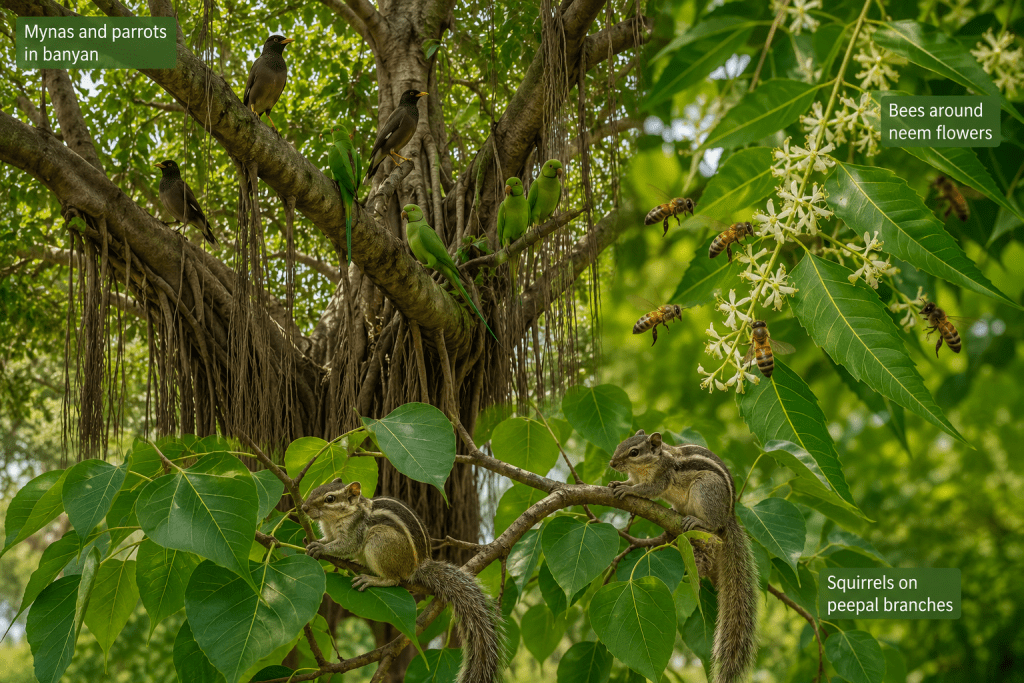
1. Biodiversity restoration
Native species support:
- birds
- butterflies
- bees
- soil microorganisms.
Ficus species alone support hundreds of insect and bird species.
2. Alignment with traditional knowledge
Many native trees appear in Ayurvedic plant knowledge documented in classical texts such as:
- Charaka Samhita
- Sushruta Samhita.
These trees historically formed part of temple gardens, sacred groves, and medicinal landscapes.
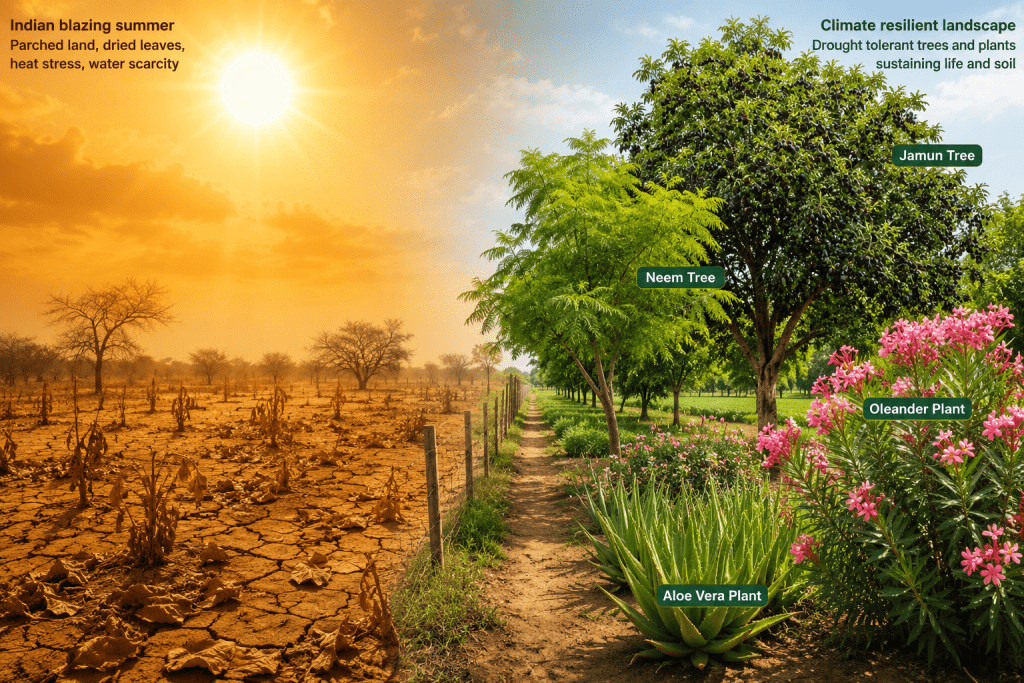
3. Climate resilience
Native species:
- tolerate heat and drought better
- require less irrigation
- maintain soil health.
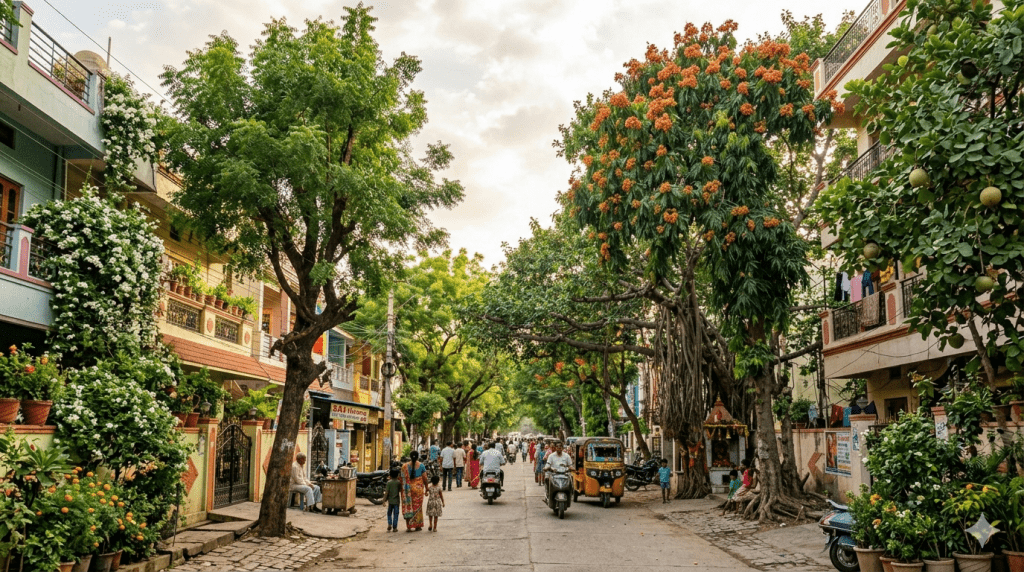
4. Cultural continuity
Trees such as:
- Raavi Chettu, Pippilam – Peepal Tree (Ficus religiosa)
- Maredu, Bilvamu/Sriphalamu – Indian Bael (Aegle marmelos)
- Kadambamu, Rudraakshakamba (Neolamarckia cadamba)
are deeply embedded in Indian religious and cultural traditions.
Policy implication
Future urban forestry, Smart Cities landscaping, and monument conservation programs led by the Archaeological Survey of India could prioritize these indigenous species to gradually restore historically rooted and biodiverse public landscapes
Further Reading:
Colonial Era Trees Dominate Indian… | Less Common Colonial Trees | Indian Trees For Public Places
You may also like to read:
- Reclaiming Landscape in Indian Public Spaces from British Colonialism and Macaulayism
- Colonial Era Trees Dominate Indian Roads And Parks – 75+ Years After Independence (Main Article)
- Indian Trees For Roads, Parks, And Pubic Institutions
- Criticizing British Colonial Rule For Introducing Foreign Plants In Public Spaces
- The Need To Decolonize Public Landscapes In India
- How Does Continuing Colonial-Era Planting Reflect Coloniality And Ignore Ancient India’s Botanical Knowledge?
- Reviving Ancient Hindu Garden Traditions In Protected Monuments
| We encourage bharatiyas to plant Indian trees on roads, public spaces and their homes. |