
The Progress Of The Spiritual Life Of Dasnami Monks
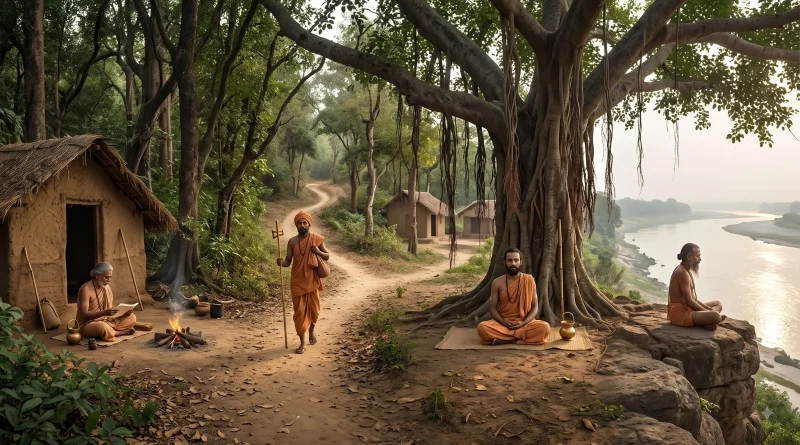
There are four stages of spiritual development recognized by the Dasnami monastic tradition among its ascetics: Kutichak, Bahudak, Hansa and Paramhansa. These categories are the successive stages of a monk’s life as he moves from renunciation, religious discipline, and self-realisation to spiritual wisdom. The first two stages are related to the Tridandi tradition, while the latter two are related to the Ekadandi or Dandi order.
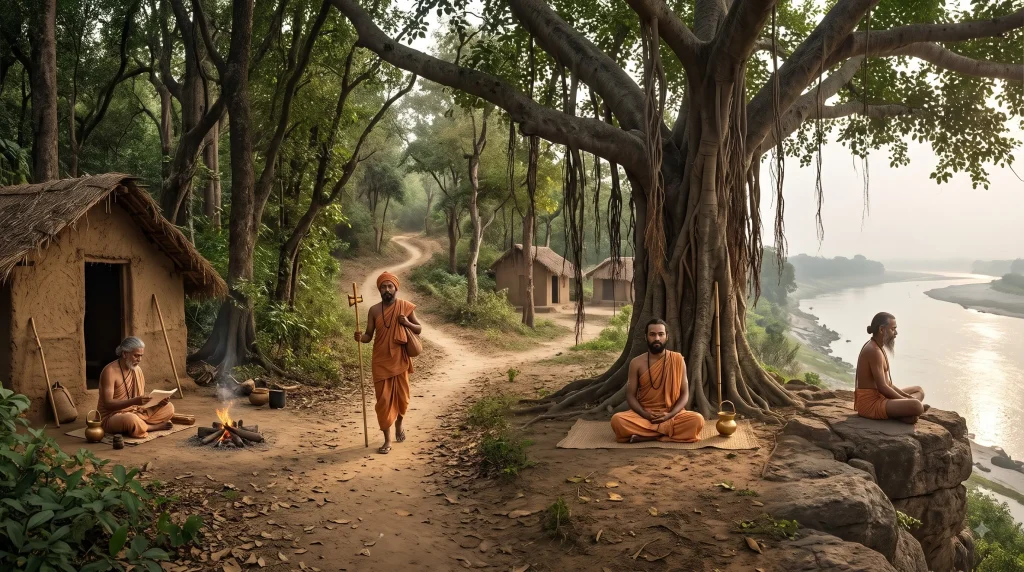
Tridandi means three rods representing the power to control speech, thoughts, and actions. Ekadandi Sannyasis carry one staff that symbolizes their dedication to the path of renunciation and spiritual quest.
- Kutichak
Kutichak is the first step towards the ascetic life. Here, a monk settles into a solitary life, usually in a small, quiet forest or tranquil locality. He dedicates time to prayer, meditation, worship, and spiritual contemplation.
A Kutichak is not a nomadic ascetic and also does not go about begging. He lives on food that’s given to him by visitors and passersby. The word Kutichak is derived from the Sanskrit word Kutir, which simply means a hut, which shows the distinct characteristic of the monk’s lifestyle.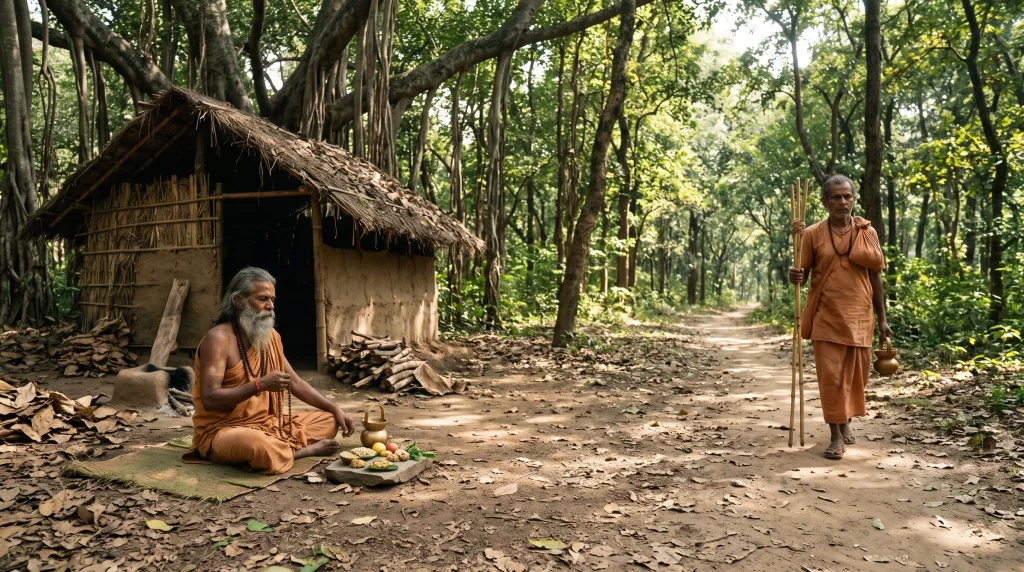
- Bahudak
A Bahudak keeps travelling from one place to another as a part of his faith. He does not accept money, but he does take some alms, in the form of food and other necessities. As per this tradition, a monk never settles anywhere for more than three days at a time.
The word Bahudak means someone who drinks water from many sources. It is an indication of the nomadic lifestyle of this ascetic and his lack of a permanent dwelling place.
- Hansa
These ascetics exemplify a higher level of spiritual awareness and practice. Monks under this category master Vedanta philosophy and follow the practice of meditation and Yoga. Contemplation of the Supreme Reality or Brahman.
Hansas do not wander, nor do they live off alms. They settle in one location and contemplate, seeking spiritual knowledge of the Supreme Reality or Brahman. They sustain their life with voluntary offerings. Hansa means swan in Sanskrit and bears a significant meaning in Hindu philosophy as the symbol of purity and wisdom.
The main purpose in the life of a Hansa monk is to experience the relationship of the individual soul, or the Jivatma, with the Supreme Soul called the Paramatma. Generally, they are spiritually elevated to such a state that they no longer need material worship, yet they worship the Divine.
- Paramhansa
The highest possible stage of spiritual development among the Dasnami monk order is Paramhansa. A monk who attains the state of Paramhansa is believed to have conquered worldly desires and attachments through the Realization of the Supreme Soul.
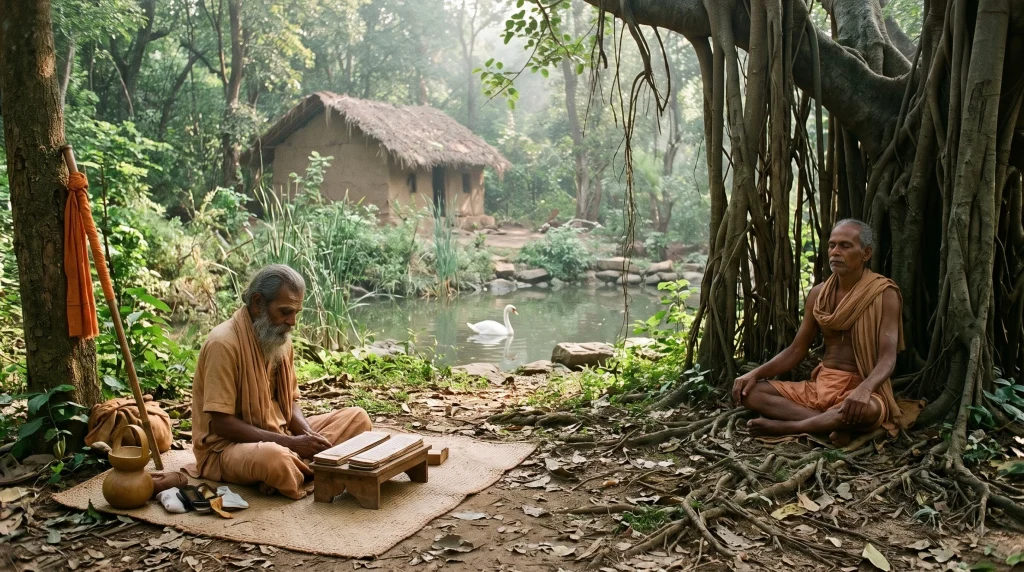
Their achievement of spiritual liberation and great knowledge is personified as instructors for spiritual seekers. Paramhansas are held in great regard as the most sacred within the Dasnami monastic tradition. Known as the dandi sannyasis, their spiritual status is regarded as supreme, and they are believed to possess the supreme divine being of Narayana.
Other classifications of Dasnami monks based on sustenance:-
Apart from the spiritual hierarchy, Dasnami Sannyasis are also divided on the basis of their food habits and livelihood. These do not necessarily signify different levels of spiritual growth.
- Bhog-bar: Ascetics who are indifferent towards worldly pleasures and material comforts, taking only necessities.
- Kutibar: The monks who exercise restraint and eat very little food.
- Anand-bar: People who do not actively seek alms, but accept them when they are offered.
- Bhuri-bar: Ascetics who get their main nourishment from forest products, herbs, and naturally growing vegetation.
These ascetic practices are due to the variety of practices in the Dasnami tradition. While Kutichak, Bahudak, Hansa and Paramhansa are the names for increasing stages of spiritual achievement, the sustenance-based divisions illustrate various lifestyle methods in which monks practice simplicity, self-control and detachment.