
Reclaiming Landscape in Indian Public Spaces from British Colonialism and Macaulayism
In order to maintain their power over India, the British colonialists projected themselves as superior and Indians as inferior. They focused on many areas to drive home this point. One of them was ornamental plants and landscape in public places. They also wanted to put their European or colonial standard plants and trees wherever possible at Indian tax payers expense.
Macaulayism and British Imperialism’s Impact on the Indian Public Landscape
Macaulayism refers to the 19th-century colonial policy, intended to create a class of anglicized Indians who would serve as intermediaries, promoting Western culture while devaluing native Indian languages and traditions. We see this abundantly in public landscapes with a lack of use of Indian origin plants and trees, both ornamental and functional. The British colonialists removed and discouraged the medicinal use of trees/plants from public places, which they controlled as rulers. They made the medical treatment via Ayurveda more remote and less accessible to the public. This is a continuation of the strategy of Macaulay, who had already removed all public support for native education in 1835.
They chose plants that looked good from abroad while eliminating good ones from India. It reinforced the mindset that good things only come from abroad, and there is nothing good in India – India means just substandard.
Macaulayism’s Impact on Modern Indian Landscaping
Even today, the public spaces in India, including avenues and public gardens, are full of colonial-era plants and trees. There is hardly any support for traditional plants and trees. India has a strong tradition of aromatic plants, yet they don’t find space in the avenues and public gardens.
There is neither any effort nor any sustained initiative to bring back the native plants, trees, and landscape. Mechanically, the various experts connected with this area keep continuing the colonial era standards, protocols, and list of plants, trees, and landscape formats.
Landscaping Goals of Ancient India
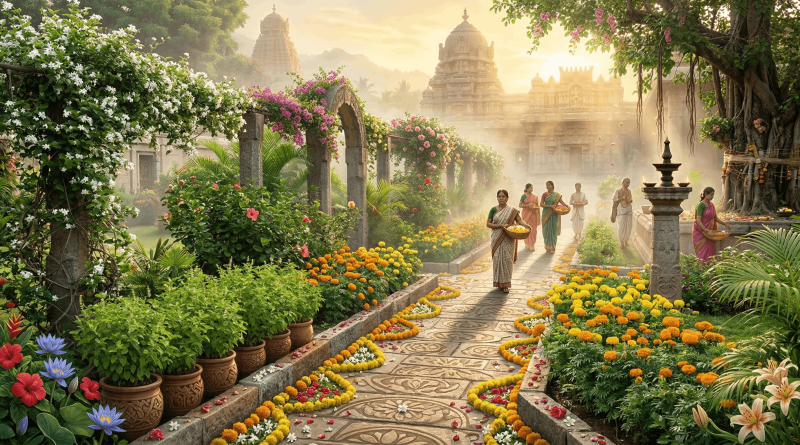
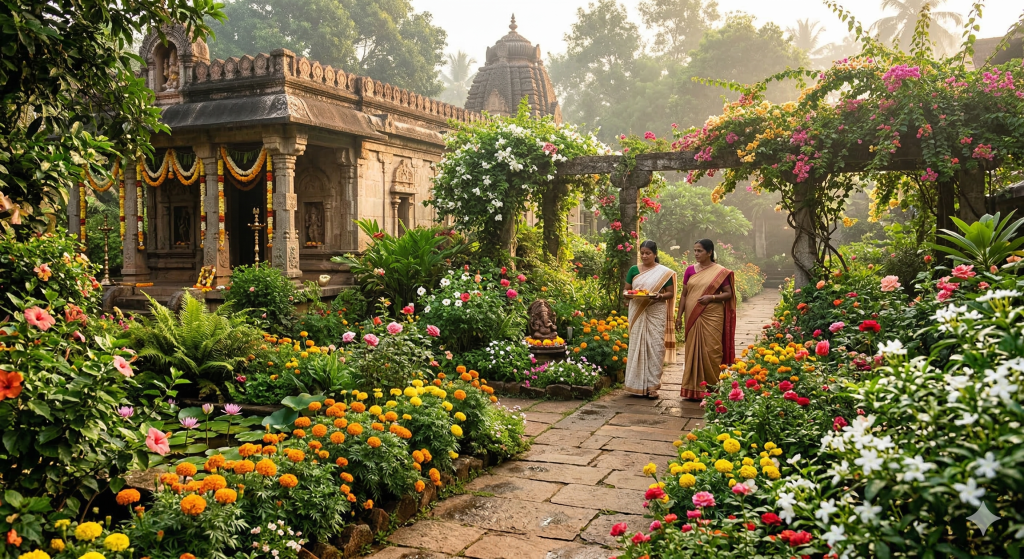
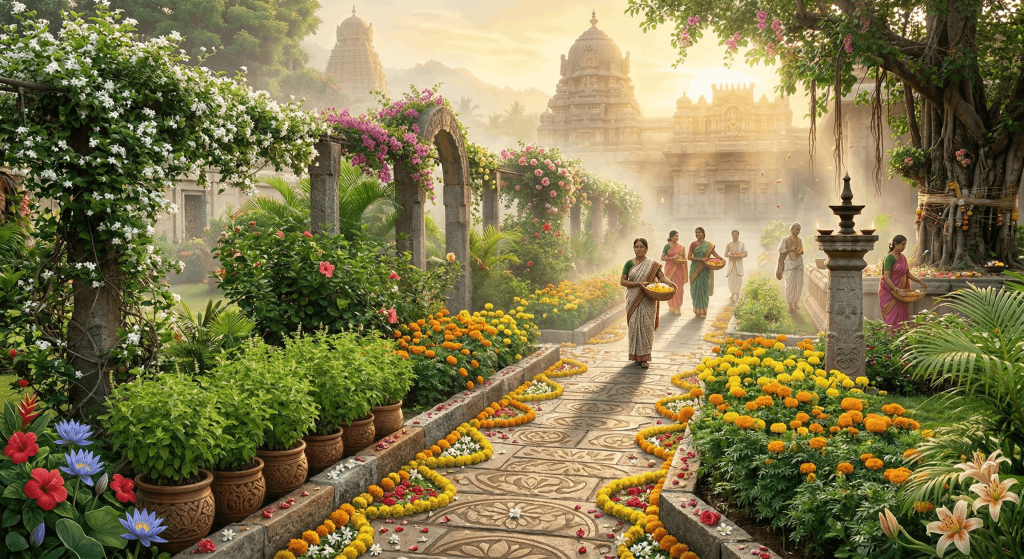
Even the very goal of landscaping was different between Ancient India and Macaulayist landscaping. The Indian concept was using native plants with religious/medicinal value and the sacred connection to nature from which dharma evolved. Importantly, in ancient India, public spaces plants/trees in India prioritized medicinal use, so the material was available to treat people abundantly. Further, the cultural meaning of the ancient Indian gardens was sacred, symbolic, and linked to cosmology. Donating space for vanams or gardens was a very highly held charitable activity. Even maintaining a vanam or garden was considered a very pious deed.
The Colonial British model of landscaping was for the display of power, control, and pushing European aesthetics. The European colonialists used landscapes to project imperial authority and “civilized order” and prevented both sacred and medicinal plants from having space in the public landscaping.
Time For Radical Change in Landscaping Mindset
Even today, the public spaces in India, including avenues and public gardens, are full of colonial-era plants and trees, with minuscule support for traditional plants and trees. As mentioned earlier, India has a strong tradition of aromatic plants, which need to find prominent space in avenue plantations and public gardens.
India not only has high biodiversity in plants and trees. The ancient knowledge of plants/trees and their uses is well documented in ancient treatises on material medica. The Charaka Samhita, an ancient treatise of Ayurveda has over 500 trees/plants documented and is dated to the 1st century. This treatise is likely a collection of previous knowledge. That makes, the ancient Indian knowledge of plants/trees to a much earlier time. There is no shortage of good plants and trees of Indian origin to put in public landscapes; only the will is missing.
There is neither any effort nor any sustained initiative to bring back the native plants, trees, and landscape. Mechanically, the various landscape and garden experts keep continuing the colonial era standards, protocols, and use only such plants, trees, and landscape formats. Sadly, most of the major Hindu Mandirs that are flush with tens of crores of surplus funds also do not make much attempt to revive the ancient landscapes as per the Hindu shastras.
It is time to aggressively make changes to public landscapes and reintroduce Indian plants and trees into public landscapes.
Main Articles: Colonial Era Trees Dominate Indian… | Less Common Colonial Trees | Indian Trees For Public Places | Why These Indian Trees Are Preferable
You may also like to read:
- Colonial Era Trees Dominate Indian Roads And Parks – 75+ Years After Independence (Main Article)
- Why These Indian Trees Are Preferable
- Indian Trees For Public Places
- Reclaiming Landscape in Indian Public Spaces from British Colonialism and Macaulayism
- Criticizing British Colonial Rule For Introducing Foreign Plants In Public Spaces
- The Need To Decolonize Public Landscapes In India
- How Does Continuing Colonial-Era Planting Reflect Coloniality And Ignore Ancient India’s Botanical Knowledge?
- Reviving Ancient Hindu Garden Traditions In Protected Monuments
| We encourage bharatiyas to plant Indian trees on roads, public spaces and their homes. |