

Spiritual Blueprint Of Swarajya: The Influence Of Dasbodh In The Rule Of Shivaji
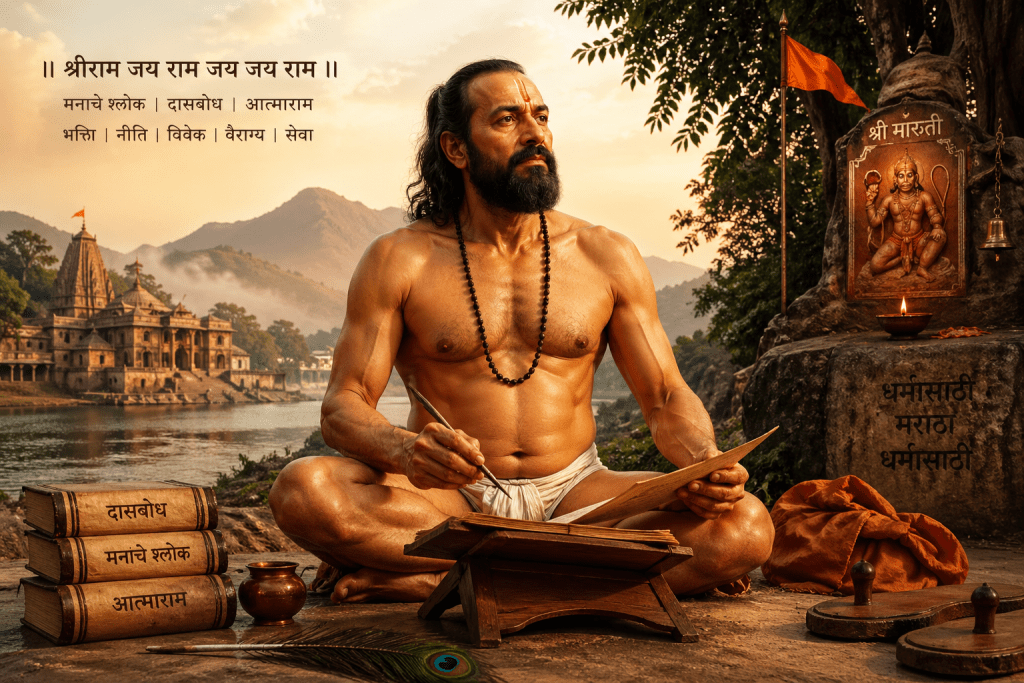
The emergence of Chhatrapati Shivaji Maharaj was not just a political event but a revival of civilization based on profound spiritual and philosophical teachings. The last and probably the greatest impact on his rule was the classical work called Dasbodh by his guru Samarth Ramdas. This was not just a spiritual guide but a practical guide to leadership, administration, and ethical statecraft.

- Dharma as Foundation of Governance
The centre of Dasbodh is the concept of Dharma righteous duty. The reign of Shivaji was characterized by a strong belief in justice, fairness and moral responsibility. He was a ruler who focused on the protection of Hindu majority, as opposed to most other rulers of his era. It was a direct expression of the teaching of Ramdas that a ruler should lead by doing right rather than by personal self-interest or politics. - Swarajya: Self-Rule with Self-Discipline
Dasbodh underlines that self-mastery is the first step towards freedom (Swarajya). Shivaji absorbed this idea and created not only an independent kingdom but also a strict administration. His own behavior, of restraint, humility, and purpose, was the prelude to his empire. He demonstrated that leadership is not about authority but disciplined service to the people. - Strategic Wisdom and Practical Intelligence
Ramdas did not promote blind spirituality; Dasbodh is full of tips and tricks on decision-making, war strategy, and human behavior. This applied wisdom is seen in the use of guerrilla warfare, fort management, and intelligence networks by Shivaji, which were sources of military brilliance. He was a man of courage and care, of aggression and foresight, and reflected the advice of the text on the exercise of strategic thought. - Detachment and Ethical Power
The concept of Vairagya, which essentially translates into detachment, is one of the most powerful messages of Dasbodh. Shivaji, despite being a powerful king, never identified himself with arrogance and excess; his life was a true embodiment of this concept. He never took on frivolous luxuries and was always keen on the well-being of his people. This distance helped him maintain a sound and moral reign, as power never distorted his vision. - People Empowerment
Ramdas noted that a people who are empowered makes a kingdom successful. The administration of Shivaji facilitated local involvement, effective revenue collection, and appointments based on merit. He earned the trust of his subjects, who became stakeholders in the vision of Swarajya. This participative governance was a visionary one and highly consistent with the teachings of Dasbodh. - Leadership Rooted in Courage and Faith
Dasbodh emphasizes several times the need for faith-directed courage. The life of Shivaji was a test of courageous leadership based on spiritual belief. He stood firm in the face of mighty empires, or even domestic problems, and his guru was his source of strength.
Conclusion
The unity between Dasbodh and the reign of Shivaji can be an effective example of leadership to this day. It demonstrates that it is not only authority that makes good governance, but values, discipline, and service. Shivaji never simply created an empire; he created a heritage of spiritual wisdom and ethical rule. In an era where authority, and not ideals, has been prevalent, the lessons of Dasbodh, as embodied in the reign of Shivaji, serve as a guide they encourage us to remember that the best kingdoms are those whose foundations are paved with virtues and wisdom and humanity.
You may also like to read:
- Swami Samarth Ramdas – A Brief Introduction
- Samarth Ramdas, His Guru And Ramdasi Parampara
- Books Authored By Samarth Ramdas: What Do They Contain?
- The Living Legacy Of The Samarth Sampradaya: Tradition In Practice Today