
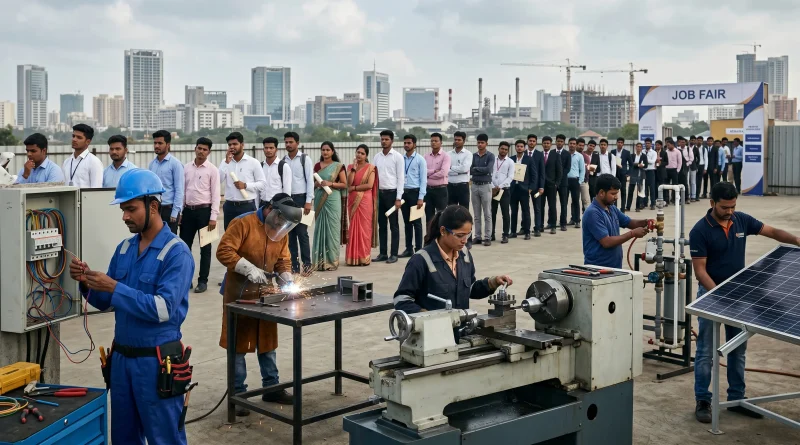
India’s Workforce Has The Lowest Formal Vocational Training Among Major Economies
India is the country with the largest number of people in the world living in any nation. Consequently, it is no surprise that it has a huge workforce that can be a valuable resource for all kinds of industries and sectors. Millions of people enter the job market every year, hoping to find work opportunities to enhance their career potential and live a prosperous life. It also offers a great scope for the country to improve its economic prospects. However, a closer look at this demographic advantage reveals a serious flaw that makes it difficult for our nation to maximize its growth potential. India has one of the lowest rates of basic and formal vocational training when compared to other major economies around the world.
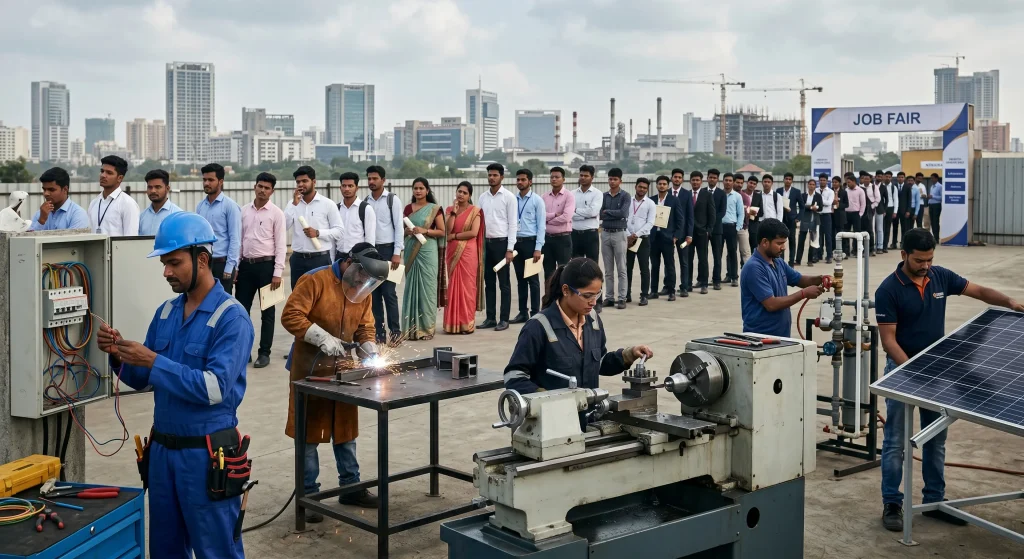
Numerous estimates from international studies and government statistics reveal that only about 4% to 5% of the country’s workforce receives proper formal vocational training. This is a stark contrast to other developed nations and economies, where the figures indicate significantly higher levels. In the United States, the figures exceed the 50% mark, while in Germany, it is 70% or more. Countries like South Korea boast of even better figures where technical education is a mainstay of economic growth and has been so for many decades. This reveals something fundamentally crucial about the employment market in India: our country has far fewer technicians, tradespeople, and skilled workers with formal training than most other advanced nations.
Such a major gap is startling to look at, but it is also significant considering that India has very high economic ambitions. India aspires to become a major global manufacturing hub, significantly expand its infrastructure, lead in renewable energy, improve its healthcare systems, and also build highly advanced technology industries. However, achieving those goals depends a lot on having engineers and managers who are skilled for such lofty goals. It is also important that Indian companies have access to millions of skilled technicians, supervisors, operators, and tradespeople who can work towards making such dreams a reality.
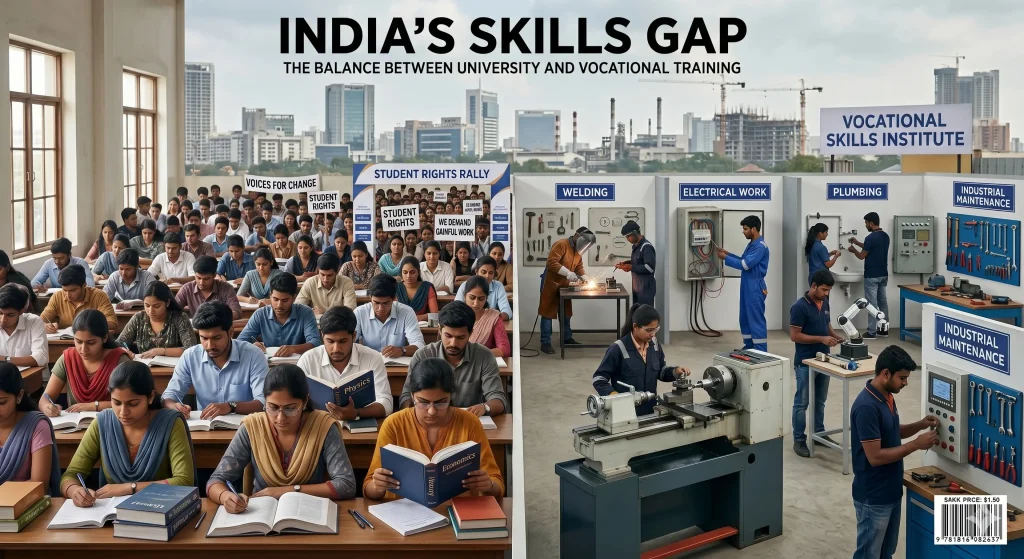
One of the major reasons for such a crucial shortage of skilled work personnel is its historical emphasis on conventional academic education. For several generations, standard university grades were regarded as the best way to accomplish specialized success. Careers in government service, engineering, medicine, management, and other white-collar professions carry substantial social prestige. Therefore, most families urge their kids to pursue academic degrees even when the labor market may show a superior demand for individuals with technical skills.
Moreover, the overall structure of the education system in India has further contributed to reinforcing this trend. In the last few decades, the colleges and universities in this country have expanded rapidly and have produced millions of graduates. But vocational institutions like the Industrial Training Institutes (ITIs), apprenticeship programs, polytechnics, and industry-linked technical schools have not seen growth at the same speed and pace. Therefore, we have ended up with a workforce where there are millions of degree holders, but they have very little formal training in the essential skills needed for employment.
You may also like to read:
- 64 Kalas, Chausat Or Chathushasti Kala
- The Indian Education System’s Heavy Bias Toward Academic Degrees Is Unlike That Of Most Developed Countries
- 64 Kalas Enhance Vocational Development And Employability Through Multi-Skilling
- Salient Features Of Germany’s Dual Vocational Training System
- Fostering Entrepreneurship: Empowering Youth Through Vocational Skills And The Wisdom Of 64 Kala
- Bridging The Skills Gap: Addressing Industry Demands With Targeted Training Programs
- Empowering Employability: How Practical Skills Make Youth Job-Ready And Reduce Unemployment Rates
- Vocational Education vs. Trade Skill
- Vocational Education Improves Employability
- What Kind of Students Benefit From Vocational Education?