
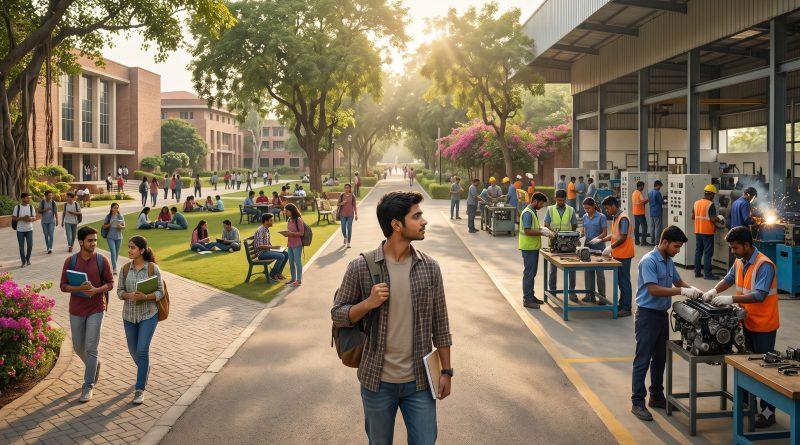
Pushing Low Scholastic-Aptitude Students To College Is Stupid
A student’s inability to accomplish well in conventional school subjects does not mean that the student lacks talent or intelligence. The social order often treats a “college degree” as the ultimate measure of career success. However, this acceptance can push young people into selecting courses that do not match their distinct abilities and interests.
College education is advantageous and beneficial for students who enjoy:
- Reading
- Writing
- Theoretical subjects
- Academic research
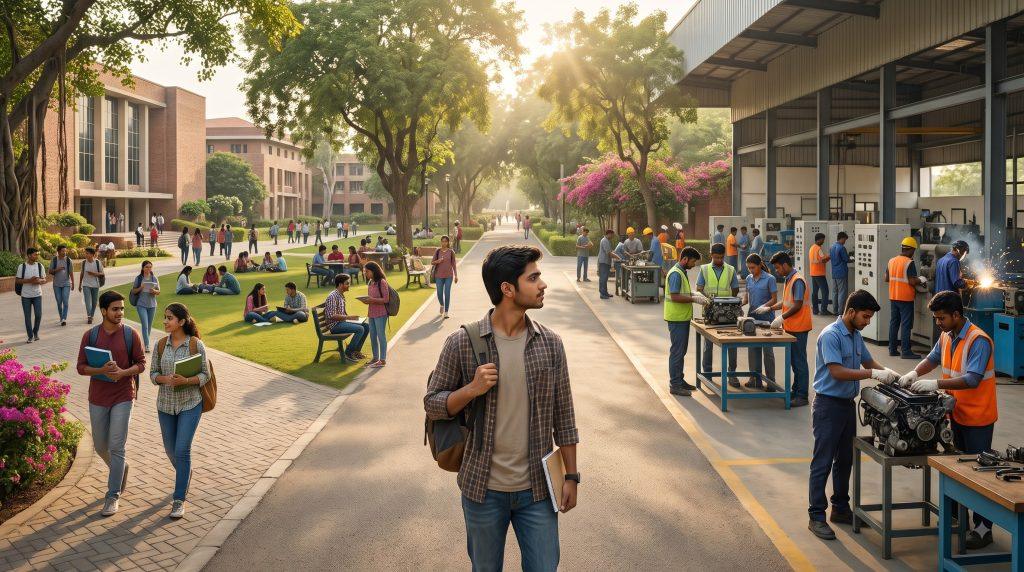
Having said that, it must also be understood that compelling everyone to follow the same path can result in shortcomings like the following:
- Poor academic performance
- Financial difficulties
- Frustration
- Limited job opportunities
The real drive of education should be to assist students in determining their own individual metiers.
Vocational Education Can Create Excellent Career Opportunities
Some students may struggle with classroom learning but show exceptional skills in:
- Repairing machines
- Working with tools
- Understanding how things function
Such students can build successful careers through “vocational education”.
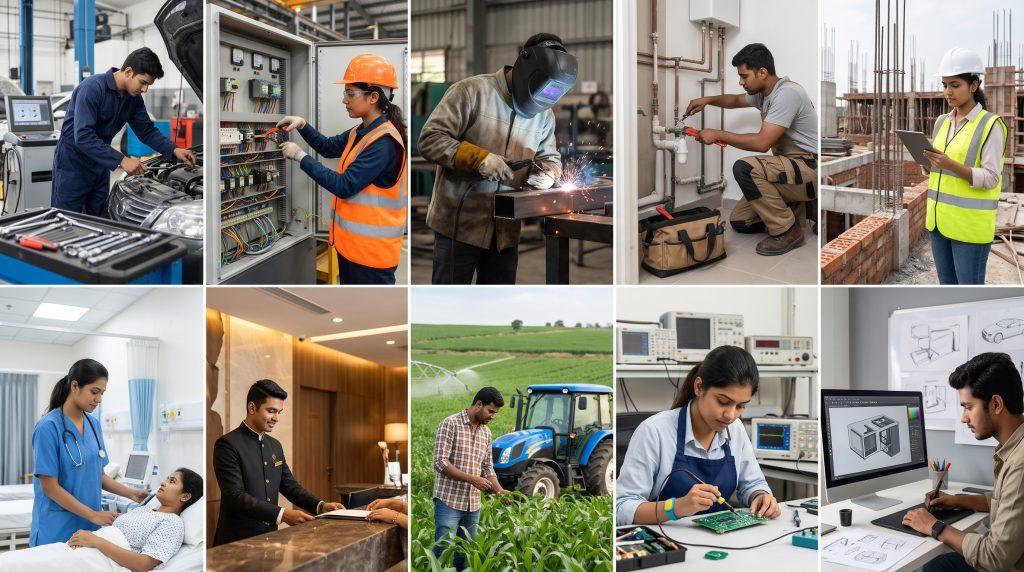
There are several career options in fields such as:
- Electrical work
- Automobile technology
- Welding
- Plumbing
- Construction
- Healthcare
- Hospitality
- Agriculture
- Electronics
- Design
Modern vocational careers are also becoming more progressive. Machinists work with computer-controlled machines, while electricians deal with:
- Solar power systems
- Smart buildings
- Modern electrical equipment
These professions require:
- Technical knowledge
- Mathematical understanding
- Years of practice
Therefore, vocational education should not be treated as an inferior alternative to college.
NEP (National Education Policy) 2020 Recognises the Importance of Vocational Education
India’s NEP 2020 acknowledges the value of “vocational education”. It also acknowledges the fact that vocational education has conventionally been considered less well-thought-of than “mainstream academic education”.
- The policy aims to bring vocational courses into the mainstream education system and eliminate this difference.
- It also supports flexible learning opportunities through which students can enter, return to, and leave education at different stages.
This would allow students to do these when they are ready:
- Acquire practical skills
- Earn qualifications
- Pursue further education
Education Must Match Employment Opportunities
India faces a gap between the skills and abilities demanded by establishments (recruiters or employers) and the qualifications people attain. The Economic Survey 2024-25 stresses the need to familiarize vocational learning at an earlier stage and highlights this mismatch.
A greater focus on practical training can help young people become job-ready. It can also reduce the drain on students to pursue degrees that may not lead to the right employment.
Students Should Never Be Permanently Labelled
While identifying a student’s natural abilities is imperative, aptitude tests should not decide their entire future. A student’s academic performance can improve with:
- Better teaching
- Confidence
- Family support
- Suitable learning opportunities
A student who chooses vocational education at 16 should still have the prospect to pursue an engineering degree or a diploma later.
Conclusion
Respect every form of talent and every profession. Parents should look beyond the question of whether their children will graduate from college. They should consider:
- What interests them
- How they learn
- Which skills can help them build successful careers
India needs engineers and teachers, but it also needs skilled and trained:
- Technicians
- Artisans
- Electricians
- Farmers
- Designers
- Craftsmen
The objective of college education is not to discourage college education. It is to understand that college is only one route to accomplishment. True education should help every individual develop their aptitudes and become skilled, productive, and independent.