
Medicinal Plants In Public Landscapes In Ancient India
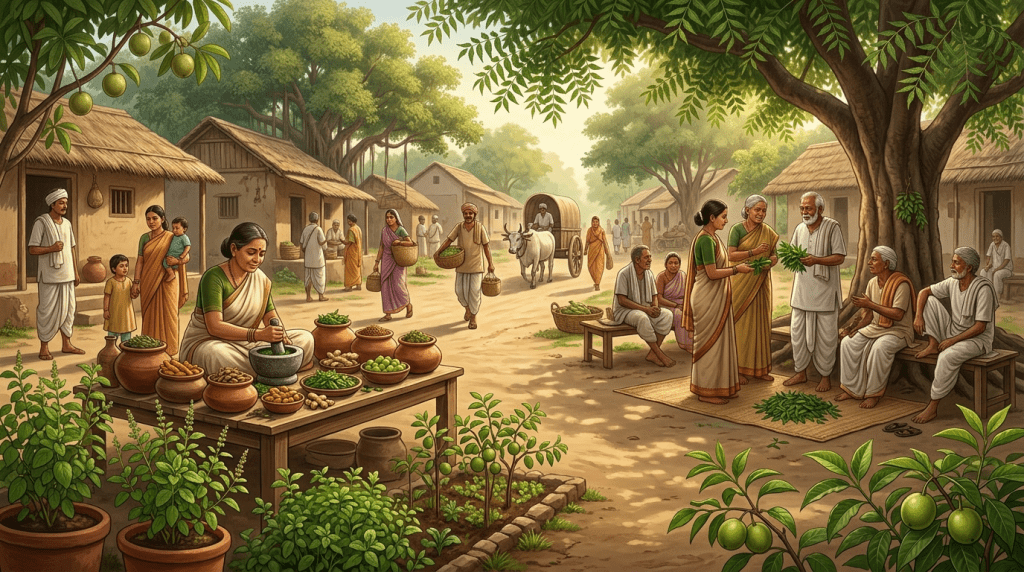
In early India, parks and public landscapes were always intended to offer much more than merely shade or visual beauty. Trees and plants were also considered vital for their medicinal, spiritual, and ecological implications. They shaped an indispensable part of India’s community life. Special spaces were created by planting medicinal plants in them. These spaces included village squares, temple groves, gardens, and roadside avenues.
Such an approach indicated a highly holistic worldview where environment and health concerns were tied to the functioning of society as a whole. The various communities in India made sure that people have easy access to remedies. Hence, their efforts towards inconspicuously entrenching numerous medicinal plants into the everyday environs, predominantly during times of critical infections and even epidemics, were evident.
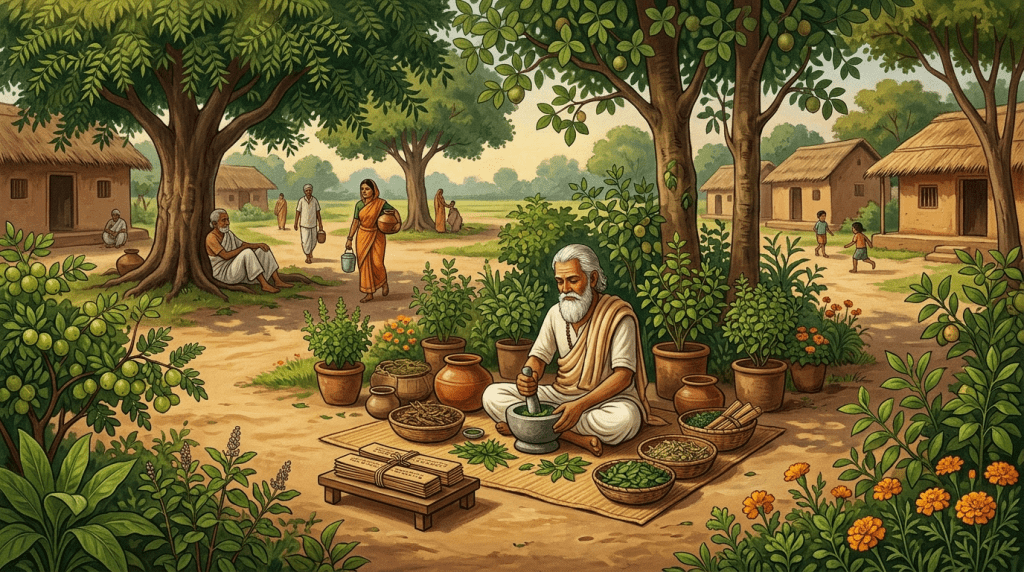
 Most recognized classical texts like Ashtanga Hridaya, Charaka Samhita, and Sushruta Samhita mention hundreds of diverse plant species. Additionally, the texts judiciously detail diverse plant properties, their habitats, and even specific therapeutic uses. As a lot of treatments made use of fresh leaves, bark, fruits, and roots, planting these medicinal plants within easily accessible landscapes was considered vital for preserving public health.
For both physicians and communities, the ancient texts functioned as comprehensive guiding tools, critically emphasizing the importance of using the readily available plant and herbal resources. People in ancient India were vested with extensive botanical knowledge. This was advanced within the scope of Ayurveda.
The community settlements of the earliest times deliberately integrated different medicinal plants into shared spaces to effectively support this system. For instance, plants and trees well-known for their distinct healing properties were frequently lined in village boundaries, temple courtyards, and public pathways.
The Bael tree was broadly associated with various medicinal and sacred landscapes. Planting Bael is common in temple gardens. Sacred groves and temple gardens usually functioned as stands of medicinal biodiversity. Thus, they facilitated blending spiritual and ritualistic practices with practical healthcare requirements. Conversely, Bael’s leaves and fruits were every so often used to treat sicknesses like gastrointestinal disorders, and infections. It was regarded as an active way to ensure everyone could gain from them.
Peepal (Ficus religiose) and Banyan (Ficus benghalensis) trees were used extensively in treating common health complications like digestive disorders and inflammatory conditions. Hence, these were key components of temple complexes and village squares. The expansive canopies helped to create a cooler microclimate. It helped regulate temperature, which indirectly supported the well-being of the community members. Apart from offering support to the local biodiversity and providing adequate shade to people, these trees were long recognized in traditional Ayurvedic practice for their medicinal latex, bark, and fruits.
Likewise, the Neem is one of the readily used medicinal trees with effective antimicrobial, antifungal, and insect-repellent properties. This tree was used extensively to treat skin issues and fevers. The tree’s leaves, oil, and bark made it a crucial resource for everyday healthcare needs. Therefore, it was planted in community spaces across the country.
You may also like to read:
-
- Reclaiming Landscape in Indian Public Spaces from British Colonialism and Macaulayism
- Reviving Ancient Hindu Garden Traditions In Protected Monuments
- Criticizing British Colonial Rule For Introducing Foreign Plants In Public Spaces
- The Need To Decolonize Public Landscapes In India
- How Does Continuing Colonial-Era Planting Reflect Coloniality And Ignore Ancient India’s Botanical Knowledge?
- Colonial Trees vs Native Indian Substitutes for Roads and Parks
- Garden Traditions Of Hindu Temples