
Landscaping Goals – British Colonial Imperialism Versus Indian Tradition
Across Indian cities, the various types of public landscapes, including parks, gardens, and boulevards, often bear a discrete and continuing impact of British colonial rule. The trees and areas of greenery may seem like fertile and beautiful spaces, but they serve as a continuation of aesthetics and preferences that reflect the British mindset and the rigid intellectual ideas of Macaularism. These spaces cannot just be reclaimed by redefining their horticultural practices. What is needed here is a restoration of cultural memory, civilizational confidence, and ecological wisdom.
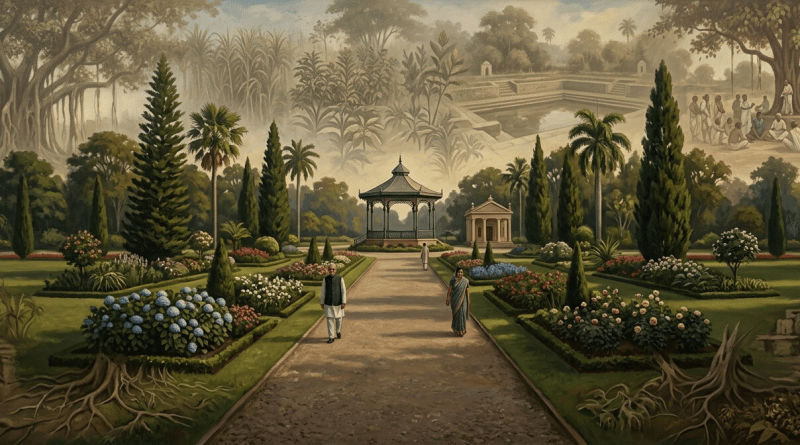
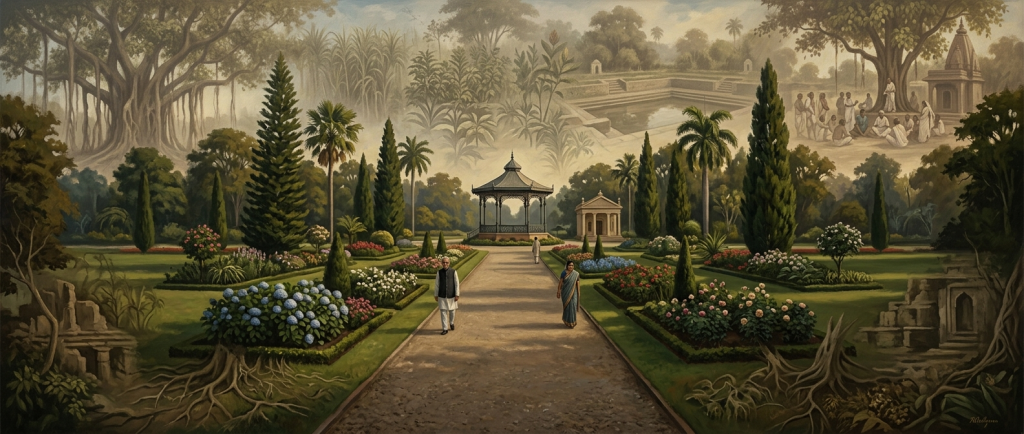
During the long colonial rule, rulers and administrators from the British Empire consistently presented themselves as belonging to a superior race, going to great lengths to underestimate Indian traditions. This ideology did not remain confined to administrative matters but also extended into the realm of creating public landscapes. For example, many ornamental plants were introduced during their rule, which surely added beauty to Indian landscapes, but were not suited to the ecological balance of Indian surroundings. These plants often served as subtle forms of cultural messaging. Various types of European plants were introduced into Indian landscapes, but they didn’t support the growth of native flora. Such choices were not random or accidental; rather, they stressed the idea that order, beauty, and sophistication were essentially Western concepts that Indians allegedly had no notions about, and that only the British rulers could be aptly credited for bringing them to India.
Macaulayism aimed to produce a class of the Indian population who were systematically disconnected from their own culture and heritage. Rooted in the 1835 education policy by Thomas Macaulay, the ideas that made up Macaulayism also influenced choices on how to design public spaces. India had long held indigenous knowledge systems in areas like the cultural and medicinal importance of plants, which were totally sidelined by Macaulayism. Plants and trees that served essential therapeutic, ecological, and spiritual roles in Indian spaces were removed slowly and steadily from all public domains. The Indian knowledge body of Ayurveda rests heavily on the easy availability of native plants to function effectively, but when these plants became scarce, they became less and less effective for the large population.
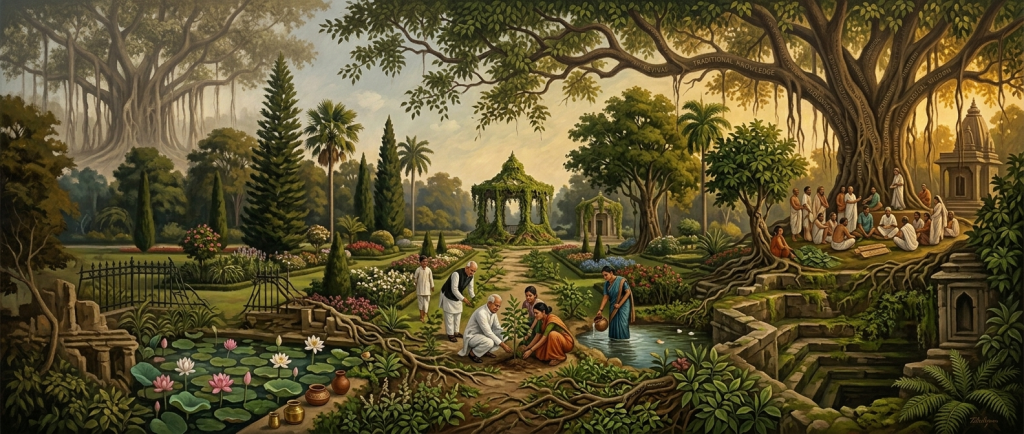
Ancient Indian landscaping was deeply integrated into everyday life and philosophy. Unlike gardens elsewhere that served as decorative spaces, vanams in India held symbolic, sacred, and functional roles. Trees and plants were chosen for ecological suitability, spiritual meaning, and medicinal use. Garden design and maintenance were acts of spiritual importance, while public landscapes functioned as living spaces and repositories of knowledge and health. Ancient texts like Charaka Samhita detail many plants and their uses, highlighting India’s advanced understanding of botany.
This uniquely holistic approach was effectively disrupted by the colonial methods. Therefore, landscaping efforts under the British Raj became a tactic of displaying their distinct authority. That’s where spaces were always controlled, structured, and aesthetically aligned with European tastes. The whole emphasis moved from practical utility and meaning to dominance.
You may also like to read:
- Reclaiming Landscape in Indian Public Spaces from British Colonialism and Macaulayism
- Reviving Ancient Hindu Garden Traditions In Protected Monuments
- Criticizing British Colonial Rule For Introducing Foreign Plants In Public Spaces
- The Need To Decolonize Public Landscapes In India
- How Does Continuing Colonial-Era Planting Reflect Coloniality And Ignore Ancient India’s Botanical Knowledge?
- Colonial Trees vs Native Indian Substitutes for Roads and Parks
- Medicinal Plants In Public Landscapes In Ancient India
- Garden Traditions Of Hindu Temples
- Landscaping – British Colonial Imperialism vs Indian Tradition