
How Colonialism Changed Gardening In India: From Native Landscapes To British Lawn Culture
When Foreign Beauty Standards Replaced Good Ecology
Cultivation has always been a sign of civilization’s values. It represents harmony between humans and nature, places where food, medicine, water conservation, biodiversity, and spirituality all existed in India. However, in the colonial period, this entrenched ecological ideology was fundamentally altered. Under British influence, not only did the Indian politics and economy change, but so did the way Indians viewed landscapes that were beautiful. The productive, climate-responsible gardens were replaced by manicured lawns, ornamental flower beds, and planted plants, mostly imported, that represented the European concept rather than the Indian one. The green, lush lawn is the focus of most people these days when it comes to a well-maintained home. Curiously, this powerful image is one of the legacies of colonialism.
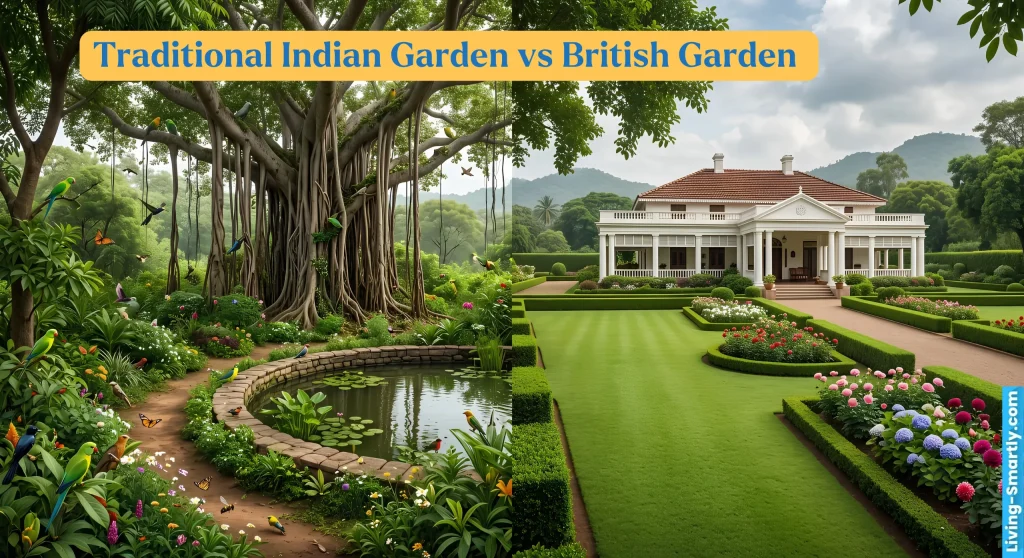
The Green Heritage of India
Indian gardening has developed over the centuries, in close dialogue with the variety of climates and ecosystems found in the subcontinent. The ancient texts like Vrikshayurveda describe some advanced knowledge about soil, water, grafting, pest control, and seasonal cultivation, which much predates the development of modern horticulture. The traditional gardens were meant to provide life, not just aesthetics. Mango, neem, banyan, peepal, jamun, coconut, banana, tulsi, and medicinal herbs were used for several purposes – food, medicine, shade, timber, fodder, habitats for birds and pollinators. These landscapes were often interwoven with water bodies and rainwater harvesting structures, which made them resilient to climate change, driven by the monsoons in India. Sacred groves, like the Karnataka Devarakadus and the Rajasthan Orans, also demonstrated an ecological perspective, in which nature was respected, safeguarded, and left to grow with little or no human involvement.
The Colonial Arrival of Lawn Culture
The British East India Company became active in the eighteenth century, bringing a totally new philosophy of gardening. European landscape design was all about order, symmetry, control, and visual perfection. Nature should bend to man, not develop on its own. The colonial bungalow, perhaps more than anything else, was a symbol of this change. The term bungalow has its roots in the Bengali bangla, but was adapted by the British to describe large houses with perfect lawns. These lawns were inspired by English country estates and came to symbolise prestige and authority. They required constant irrigation, frequent mowing, and intensive maintenance, which were not well-suited to much of tropical India. But the lawn came to be recognized as elegant; this is still the image in Indian landscaping design.

Botanical Gardens and the Imperial Landscape
Colonial botanical gardens were an important means of institutionalisation of these shifting aesthetics. Gardens were planted during the British rule, with the purpose of mainly catering to the economic interests of the British. They recorded the vast scope of Indian flora, introduced cash crops globally, and enabled the dissemination of flora throughout the British Empire. They promoted the cultivation of ornamentals, exotic plants, artistic flower arrangements, and landscaped beauty, in addition to scientific research. Gradually, native biodiversity became less prominent while imported species became symbols of refinement and progress.
From Productive Gardens to Just Ornamental Spaces
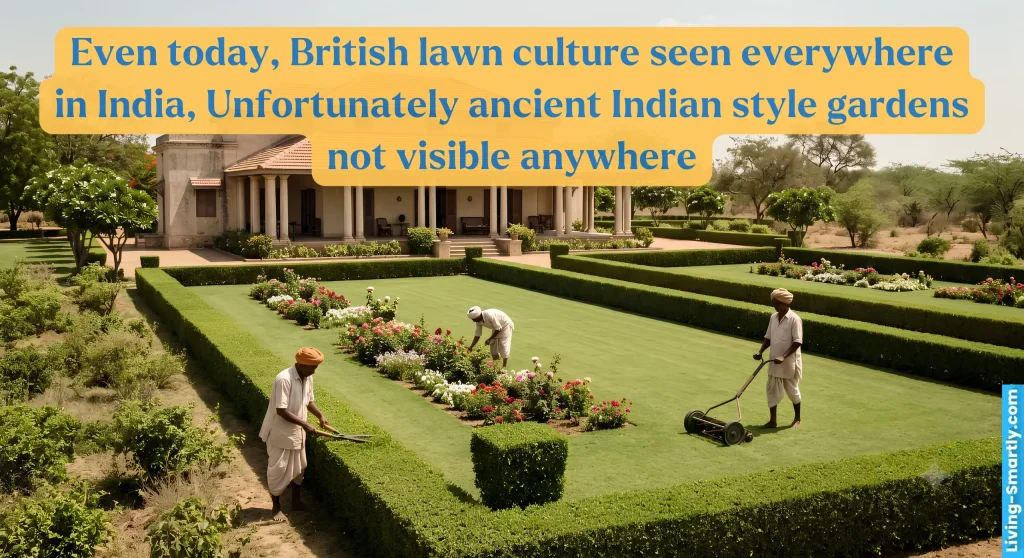
This change in colonial urban planning has spread beyond the official compounds as the colonial planning expanded. More and more Government buildings, clubs, cantonments, universities, and wealthy houses began to be landscaped in the European style. Once, productive household gardens were filled with fruit trees, vegetables, and medicinal plants, but the elements were gradually replaced by ornamental lawns and decorative shrubs. The act of gardening went from representing everyday life and ecological resilience to representing status and aesthetics. This aesthetic impact persisted after independence.
Reclaiming India’s Ecological Gardening Heritage
In spite of pressing issues of water scarcity, loss of biodiversity, and climate change, the colonial lawn remains prevalent in residential colonies, institutions, and public parks in India. Nevertheless, huge amounts of water continue to be used to keep turf grass that provides few ecological values to native trees, shrubs, and mixed landscapes. With India facing environmental problems, it may be time to redefine the concept of a beautiful garden. The future doesn’t need to be about maintaining colonial aesthetics; it needs to be about coming back to the ecological wisdom embedded within Indian culture.
The true definition of a garden in the Indian spirit is one that is able to support various forms of life, not only showcasing its quality or aesthetics. Despite reflections of a colonial past, India still has the opportunity to redefine its garden culture, making it a living testimony to environmental resilience and sustainable living with nature.
Further Reading:
Why Indian Trees Prefereable? | Indian Trees For Public Places | Less Common Colonial Trees
You may also like to read:
- Europe Tried To Control Nature, Bharat Learned To Live Within It
- Useful Ayurvedic Plants And Trees Must For Homes and Neighbourhoods
- Reclaiming Landscape in Indian Public Spaces from British Colonialism and Macaulayism
- Why These Indian Trees Are Preferable
- Indian Trees For Public Places
- Criticizing British Colonial Rule For Introducing Foreign Plants In Public Spaces
- The Need To Decolonize Public Landscapes In India
- How Does Continuing Colonial-Era Planting Reflect Coloniality And Ignore Ancient India’s Botanical Knowledge?
- Reviving Ancient Hindu Garden Traditions In Protected Monuments