

Framework For Decolonized Landscapes – Archaeological Survey of India
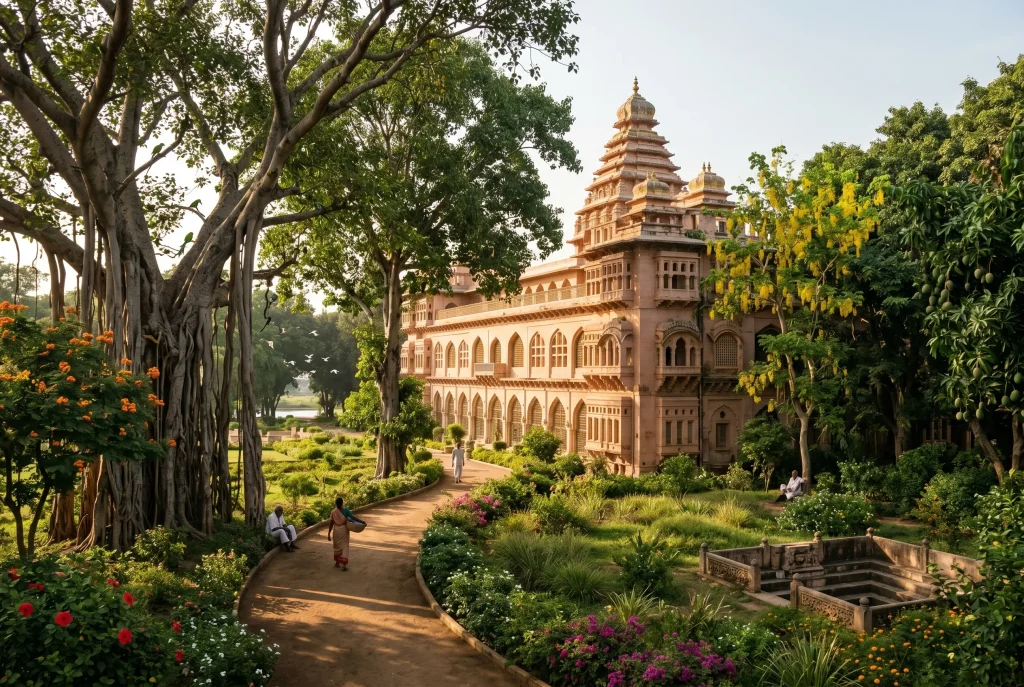
The historic monuments sited throughout India were not originally meant to be isolated architectural structures. Instead, they were intended to be integrated with extensive cultural landscapes comprised of gardens, water bodies, sacred groves, and different kinds of medicinal plants.
Over the years, most conservation efforts have focused on the preservation of the built structures. However, the ecological and landscaping features surrounding them have received relatively less attention. As conservation projects toward sustaining heritage sites of India embrace more holistic lines, renewed focus is now being given to reinstating the historically accurate plant landscapes around significant monuments.

The Archaeological Survey of India (ASI), functioning under the Ministry of Culture, and other urban initiatives like Smart Cities Mission can come up with plans to resuscitate native gardening traditions while fostering biodiversity and cultural education.
Recognizing heritage landscapes as living cultural systems
One of the key steps towards growing the scope of heritage conservation is to embrace not just the stone structures erected long ago, but also the adjacent ecological landscape. Many monasteries, sanctuaries, and early settlements have long-maintained intricate gardens called “nandavanams”. These were hallowed gardens full of fruits, flowers, and medicinal plants for everyday ritual and community usage.
The Archaeological Survey of India could come up with more operative preservation strategies that deliberate landscapes as crucial parts of the endangered memorials. By re-establishing such landscapes and estates around heritage sites, it is likely to bring back the missing connection between ecology, architecture, and cultural practices.
Reintroducing indigenous and medicinal plant species
The various texts of ancient India showcase that public landscapes at one time were filled with many different types of medicinal and ecologically important plants. The Charaka Samhita and the Sushruta Samhita are specimens of classical Ayurvedic texts. These texts mention therapeutic uses of herbs and trees and elaborate on botanical understanding. Heritage landscape restoration projects could emphasize bringing in most of the indigenous plant species mentioned in such texts, like bael, neem, and amla. Many such plants also support biodiversity and climatic resilience. By planting these trees in gardens and parks surrounding the historical monuments, conservation initiatives could endorse ecological restoration and encourage traditional knowledge systems.
Banning planting new colonial-era plants and trees in ASI sites
A large number of public landscapes established during the colonial period brought in ornamental trees that were not historically part of Indian botanical traditions. Although some of these trees are now naturalized, India’s heritage landscape restoration projects can immediately shift toward native plant species in new plantings. All the existing colonial trees can be gradually removed in a phased manner. They would only prioritize the plantation of indigenous species in upcoming future landscaping endeavors around historical monuments and public parks. This creates a unique look that will draw more visitors too!
Integrating temple garden and sacred grove traditions
The ancient landscaping traditions of India also comprised sacred groves. These were protected forest patches destined for religious and ecological purposes. Similar practices existed within the temple complexes, where dedicated garden areas were preserved to supply flowers and sacred plants for ritual use. The upcoming conservation programs could bring back the tradition of having heritage gardens around historical monuments.
There are 850 unique tree species in India. Growing a carefully chosen selection of those uniquely Indian trees in ASI sites adds uniqueness to the monuments, enhances appeal, and may help attract foreign tourists. Such an exercise would not only add beauty to the ASI sites but also help to increase visitors, especially foreign tourists. As such, traditional Indian plants and trees will be uniquely seen only in India, and foreign tourists might find it a charming and pleasantly different experience.
You may also like to read:
- Colonial Era Trees Dominate Indian Roads And Parks – 75+ Years After Independence
- Less common Colonial Era Introduced Trees in India
- Plant Indian Trees on Roads, in Parks and Public Institutions
- Why These Indian Trees Are Preferable
- How Does Planting Colonial-Era Trees Reflect Coloniality And Insults Ancient India’s Deep Botanical Knowledge?
- Medicinal Plants In Public Landscapes In Ancient India
- Garden Traditions Of Hindu Temples
- Criticizing British Colonial Rule For Introducing Foreign Plants Recklessly In Public Spaces
- The Need To Decolonize Public Landscapes In India
- Reviving Ancient Hindu Garden Traditions In Protected Monuments
- Reclaiming Landscape in Indian Public Spaces from British Colonialism and Macaulayism